Brushless vs Brushed RC Motors: Which Is Better?

Alright, fellow RC fanatics and soon-to-be RC dynamos! If you’re looking to dive into the exhilarating world of remote control cars, especially with your son, you’re in for a treat. But before you hit the throttle, there’s a fundamental decision that will shape your entire experience: choosing between brushed and brushless motors. It’s the core of your RC car’s performance, durability, and most importantly, the fun factor. Think of this as your personal pit crew guide to understanding what makes these miniature beasts tick, so you and your aspiring racer can make the perfect choice and unleash some serious power!
The Heart of the Beast: Understanding RC Motors
At the core of every RC vehicle lies its motor, the powerhouse that translates electrical energy into raw speed and torque. Understanding the two main types – brushed and brushless – is key to picking the right ride for your adventures.
Brushed Motors: The Dependable Workhorse
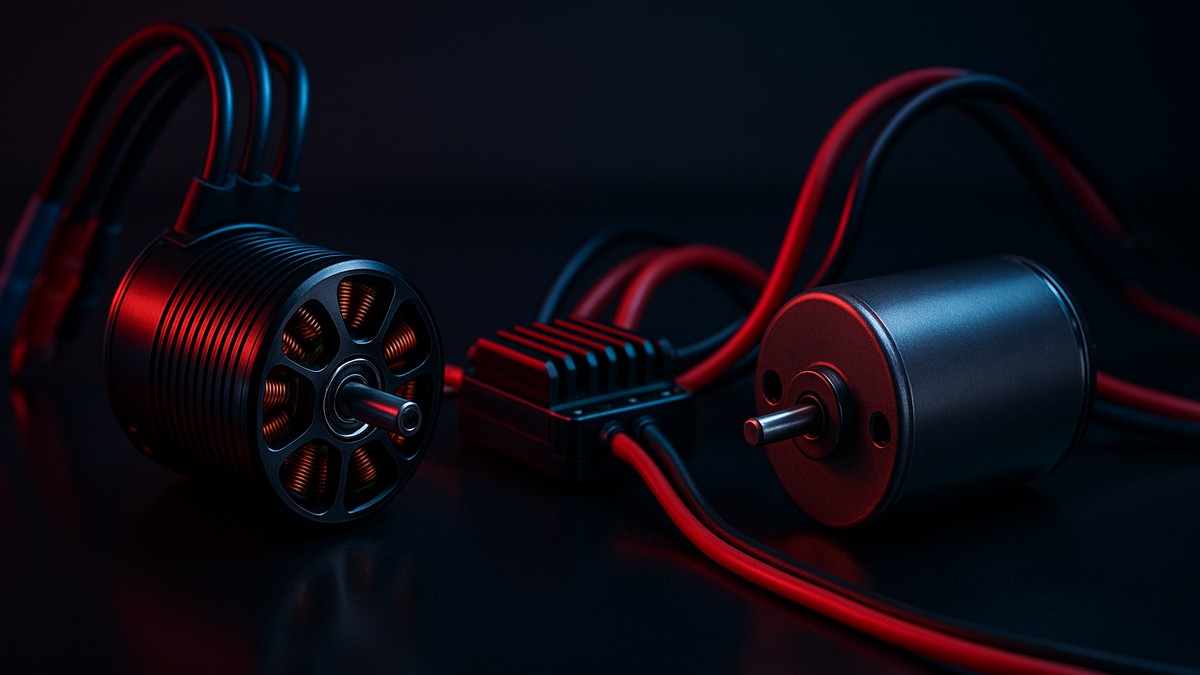
Brushed motors are the OGs of the RC world, a classic design that’s been around for ages. They’re called “brushed” because they use small carbon brushes to transfer electrical current to the spinning part of the motor (the rotor).
- How they work: Current flows from the battery, through the Electronic Speed Controller (ESC), and then through the brushes to the commutator (a segmented ring on the rotor). This creates an electromagnetic field that causes the rotor to spin.
- Pros:
- Simplicity: They’re mechanically straightforward, making them easy to understand and troubleshoot.
- Lower Initial Cost: Generally more affordable to buy both the motor and the compatible ESC.
- Good for Beginners: Their less aggressive power delivery makes them more forgiving for new drivers, especially younger kids learning control.
- Widely Available: Many entry-level RC cars, like the LaTrax Teton or Traxxas 1/16 E-Revo brushed versions, come equipped with them.
- Cons:
- Less Efficient: Friction from the brushes generates heat and wastes energy, leading to shorter run times and less power output compared to brushless.
- More Maintenance: The brushes wear down over time and need replacement. The commutator can also get dirty or damaged.
- Slower and Less Powerful: While still fun, they simply can’t match the top speed and acceleration of a brushless system.
- Heat Generation: They tend to run hotter, which can limit performance during prolonged use.
- Typical Use: Perfect for backyard bashing, crawling (like the Axial SCX24), and casual driving, especially in 1/10, 1/16, and 1/18 scale entry-level vehicles.
Brushless Motors: The Speed Demon’s Choice
Brushless motors are the modern marvels of RC, designed for maximum performance and efficiency. As the name suggests, they ditch the physical brushes entirely.
- How they work: Instead of brushes, a sophisticated electronic speed controller (ESC) rapidly switches the polarity of electromagnets in the motor’s stator (the stationary part). This creates a rotating magnetic field that causes the rotor (which has permanent magnets) to spin. It’s essentially a high-tech dance of magnets!
- Pros:
- Blazing Fast and Powerful: Unmatched acceleration and top speeds, delivering a truly thrilling experience.
- Highly Efficient: No friction from brushes means less heat, longer run times, and more power converted to motion.
- Virtually Maintenance-Free: No brushes to wear out, meaning less hassle and more time driving.
- Durable and Long-Lasting: Fewer moving parts subject to wear and tear.
- Runs Cooler: Better efficiency means less wasted energy as heat, improving longevity and performance.
- Cons:
- Higher Initial Cost: Both the motor and the necessary brushless ESC are more expensive upfront.
- More Complex Electronics: Requires a more advanced ESC that’s specifically designed for brushless motors, often with more programming options.
- Can Be Overwhelming for Beginners: The raw power can make cars harder to control, potentially leading to more crashes if not handled carefully.
- Typical Use: Ideal for competitive racing, serious bashing, off-road adventures, and anyone seeking the ultimate in speed and performance, commonly found in high-end 1/10 and 1/8 scale vehicles like the Traxxas Slash VXL or Arrma Senton 3S BLX.
Brushed vs. Brushless: The Ultimate Showdown
Let’s break down the key differences that will impact your dad-son RC journey:
- Performance: Brushless wins, hands down. More speed, more torque, faster acceleration. If you want to fly across the track or do standing backflips, brushless is your go-to.
- Maintenance: Brushless wins again. No brushes to replace, virtually no internal wear. Brushed motors require periodic brush inspection and replacement, plus commutator cleaning.
- Durability: Brushless takes the cake. With fewer wearing parts, brushless motors typically have a longer lifespan and can handle more abuse.
- Efficiency & Run Time: Brushless is superior. Less heat generation means more power goes to the wheels, resulting in longer battery life for the same battery capacity.
- Cost: Brushed is more budget-friendly upfront. However, the long-term maintenance of brushed motors can add up, and the opportunity for upgrades to brushless can be enticing.
- Learning Curve: Brushed is easier for beginners. The smoother, less aggressive power delivery of brushed motors is ideal for teaching control and throttle discipline. Brushless systems can be tamed with “training modes” or lower power settings on some ESCs, but the full potential is still a lot to handle for a newbie.
Making the Right Choice: The Dad-Son Speed Guide
This isn’t just about raw power; it’s about the right power for the right hands. Here’s how to choose wisely for your duo:
Consider Skill Level and Age
- For Younger Kids (6-10) or Absolute Beginners: Start with a brushed system. It’s more forgiving, easier to control, and crashes will feel less catastrophic (both for the car and the wallet). Learning the basics of steering and throttle modulation on a brushed motor is invaluable. Brands like LaTrax and some entry-level Traxxas models are perfect here.
- For Pre-Teens (10-14) with Some Experience: If your son has driven RC cars before or is a quick learner, an entry-level brushless system might be appropriate. Look for systems that offer a “training mode” on the ESC (like many Traxxas VXL models) to gradually increase power as skill improves.
- For Teenagers or Experienced Hobbyists: Go brushless without hesitation! They’ll appreciate the speed, power, and low maintenance. This is where brands like Arrma, with their BLX systems, really shine.
Where Will You Drive?
- Backyard Bashing and Casual Fun: A brushed system is perfectly adequate for zipping around the yard, light jumps, and general play. It’s robust enough for typical scrapes and bumps.
- Open Fields, Race Tracks, or Extreme Thrills: This is where brushless motors truly excel. If you’re hitting skate parks, dedicated RC tracks, or wide-open spaces for high-speed runs, the performance of brushless is unmatched.
- Crawling: Interestingly, many high-performance crawlers, like the Redcat Gen8 or various Axial models, often use brushed motors. Their high torque at low RPMs is excellent for precise rock crawling, though brushless options are becoming more common for advanced setups.
Budget Talk (without mentioning prices directly)
Remember, the initial cost isn’t the only factor. A brushed setup is cheaper to get into, but you might find yourself wanting to upgrade to brushless down the line. Many popular brushed RC cars are designed with an easy upgrade path to brushless, making it a great way to start and then grow with the hobby. Consider if you’d rather spend more upfront for top-tier performance or ease into it with an upgradable brushed model.
What to Look For in an RC Motor System
KV Rating (Brushless Specific)
For brushless motors, you’ll often see a “KV” rating (e.g., 3500KV). This isn’t kilovolts! It stands for RPM per Volt.
- Higher KV: Generally means higher top speed but less torque. Good for speed runs and lighter vehicles.
- Lower KV: Means more torque but lower top speed. Better for heavier vehicles, off-road, or racing where acceleration out of corners is key.
For a general 1/10 scale vehicle, a 3000-4000KV motor is a common sweet spot.
Electronic Speed Controller (ESC)
The ESC is the brain of your motor system. It manages power delivery from the battery to the motor.
- Compatibility: Crucially, a brushed ESC will only work with brushed motors, and a brushless ESC will only work with brushless motors. Ensure they match!
- LiPo Battery Support: Many brushless systems require LiPo (Lithium Polymer) batteries for their higher power output. Ensure your ESC and motor are rated for the “S” rating (e.g., 2S, 3S) of the LiPo battery you plan to use.
- Waterproofing: For any off-road fun, a waterproof ESC and receiver box are almost a must-have. This allows for puddle splashing and driving in damp conditions without worry. Brands like Traxxas and Arrma often excel in this area.
Scale Size Matters
- 1/18 and 1/16 Scale: Often come with brushed motors for their smaller size and beginner-friendly nature. Brushless upgrades are available but can make these tiny rockets almost uncontrollable.
- 1/10 Scale: This is the most popular size and where you see the biggest difference. Many 1/10 vehicles offer both brushed and brushless versions (e.g., Traxxas Slash XL-5 vs. VXL).
- 1/8 Scale and Larger: Almost exclusively brushless due to the power requirements to move these heavier, larger vehicles.
Top Picks: Our Recommended Systems for Dad-Son Duos
Here are a few specific examples to get you started, covering different skill levels and types of fun:
Entry-Level/Beginner (Brushed): LaTrax Teton or Traxxas 1/16 Scale Brushed Models
Perfect for younger kids or a first-time driver. These 1/18 or 1/16 scale trucks are durable, easy to control, and relatively inexpensive to fix if crashes happen. The brushed motor provides plenty of fun without being overwhelming. They often come ready-to-run (RTR) with everything you need in the box.
Intermediate/Upgradeable (Brushed): Traxxas 2WD Slash or Rustler (XL-5 Brushed Version)
These 1/10 scale classics are fantastic. They come with a robust brushed system that offers good speed and durability for learning. The best part? They are designed for easy upgrading. When your son is ready for more speed, you can swap in a Traxxas VXL brushless system (motor and ESC) and convert it into a true speed demon without buying a whole new car. This is an excellent long-term investment.
Intermediate/Entry Brushless: Arrma Senton 3S BLX or Traxxas 2WD Slash VXL
Stepping up to entry-level brushless. These 1/10 scale short course trucks offer a significant jump in power. The Arrma Senton 3S BLX provides incredible durability and speed straight out of the box, known for its “bash-ability.” The Traxxas Slash VXL offers the same awesome upgrade path as its brushed counterpart, but comes with the powerful VXL brushless system from the start, often featuring a training mode to dial back the power for newer drivers.
Advanced/High Performance Brushless: Traxxas 4×4 Slash VXL or Arrma Typhon 3S BLX
For serious speed demons and experienced drivers. The 4×4 Slash VXL combines the brushless power with four-wheel drive, giving superior traction and handling, especially in loose terrain. The Arrma Typhon 3S BLX is a 1/8 scale buggy that’s a true speed machine, designed for high-speed park bashing and tearing up rough terrain. These will require more skill to control but deliver an unparalleled adrenaline rush.
Specialty (Crawler – Brushed): Axial SCX24 or Redcat Gen8
If your dad-son duo is more into slow-speed, technical crawling than outright speed, brushed motors still reign supreme for their precise low-end control. The Axial SCX24 is a fantastic 1/24 scale micro crawler, perfect for indoor or backyard adventures. The Redcat Gen8 is a larger 1/10 scale option that’s incredibly capable out of the box for trail driving and rock crawling. While some hardcore crawlers upgrade to brushless, the stock brushed setups are excellent for this niche.
Frequently Asked Questions
Can I put a brushless motor in a car that came with a brushed motor?
Yes, absolutely! This is a very common upgrade. However, you cannot just swap the motor. You MUST also replace the Electronic Speed Controller (ESC) with a brushless-compatible ESC. The original brushed ESC will not work with a brushless motor.
Do I need special batteries for brushless motors?
While some brushless systems can run on NiMH (Nickel-Metal Hydride) batteries, most brushless setups perform best and are designed for LiPo (Lithium Polymer) batteries. LiPo batteries offer higher voltage and discharge rates, which unleash the full potential of a brushless motor. Just make sure your ESC and charger are LiPo compatible.
How do I maintain a brushed motor?
Brushed motors require a bit more attention. You’ll need to periodically inspect and clean the commutator (the shiny copper cylinder inside) and replace the carbon brushes when they wear down. This usually involves removing a small cap on the motor housing. Keeping them clean helps maintain performance and prolongs their life.
What’s the difference between 2S and 3S LiPo batteries?
The “S” refers to the number of cells in series. A 2S LiPo is a 2-cell battery, typically 7.4 volts. A 3S LiPo is a 3-cell battery, typically 11.1 volts. The higher voltage of a 3S battery provides significantly more power and speed to a compatible brushless motor system than a 2S battery. Always ensure your motor and ESC are rated to handle the “S” rating of your battery.
There you have it, future speedsters! The choice between brushed and brushless RC motors boils down to a balance of performance, cost, and most importantly, who’s behind the wheel. Whether you opt for the dependable simplicity of a brushed motor or the blistering speed of a brushless system, the goal remains the same: create incredible memories and share the thrill of RC with your son. So, get out there, make an informed choice, and unleash some serious power and fun!
Explore More RC Guides & Gear
Ready to dive deeper? Check out these related guides and shop our hand-picked RC collection:
Similar Car Picks
🏁 Don't Overpay for Your Kid's Next RC Toy
Get our free Dad's RC Buying Guide + weekly deal alerts on the best RC cars, trucks & drones. No spam, just the good stuff.