RC Airplanes for Beginners: How to Start Flying

The Thrill of RC Flight
Flying an RC airplane is one of the most rewarding hobbies you can pick up. Unlike drones that hover in place, airplanes must keep moving forward to stay airborne — and that fundamental challenge is what makes them so satisfying to master. If you’ve ever watched an RC plane soar overhead and thought “I want to do that,” this guide is your starting point.
Types of RC Airplanes
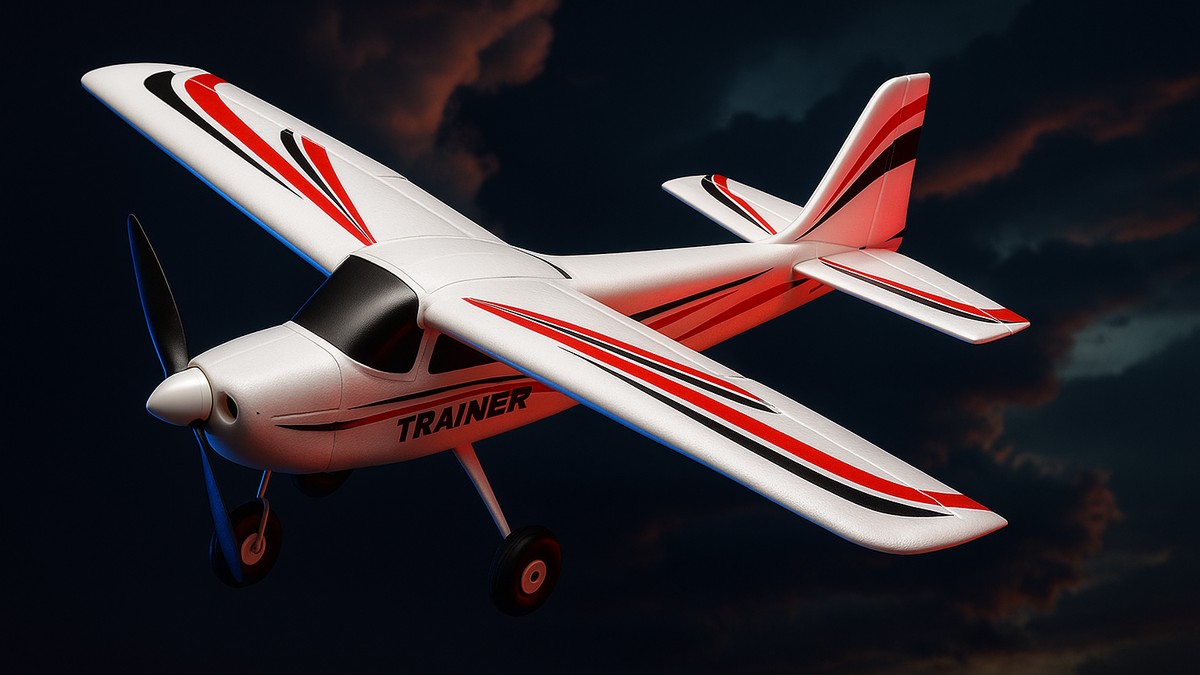
Trainer Planes
Trainer planes are specifically designed for learning to fly. They feature high wings (wings mounted on top of the fuselage) for natural stability, gentle flying characteristics, and forgiving handling. Every new pilot should start with a trainer. Period.
Sport Planes
The next step up from trainers. Sport planes are more agile with mid-mounted wings, faster speeds, and the ability to perform basic aerobatics like loops and rolls. Graduate to these after you’re comfortable with your trainer.
Aerobatic/3D Planes
Purpose-built for extreme maneuvers including hovering, knife-edge flight, and inverted flat spins. These are expert-level aircraft. Do not start here.
Scale Planes
Replicas of real aircraft — warbirds (P-51 Mustang, Spitfire), commercial jets, bush planes, and more. Scale planes vary widely in difficulty. Some warbirds fly beautifully; others are challenging due to their realistic (but less stable) wing configurations.
Jets
RC jets use electric ducted fans (EDF) or turbine engines for high-speed flight. They’re fast, exciting, and advanced. Wait until you have solid flying skills before attempting jets.
Understanding Wing Types
- High wing — Wings above the fuselage. Most stable, self-correcting. Best for beginners.
- Mid wing — Wings at the middle of the fuselage. Balanced between stability and agility.
- Low wing — Wings below the fuselage. Least stable, most aerobatic. For experienced pilots.
SAFE Technology and Stabilization
Modern beginner planes often include electronic stabilization systems (like Horizon Hobby’s SAFE technology). These use gyroscopes to automatically level the plane, prevent extreme bank angles, and even panic-recover to level flight at the push of a button. This technology has made learning to fly dramatically easier and less expensive (fewer crashes!).
Getting Started: Step by Step
- Simulator first — Spend 10+ hours on an RC flight simulator (RealFlight, Phoenix). Connect a real transmitter via USB. This is the single most important step and saves hundreds of dollars in repairs.
- Find a flying field — You need a large open area, ideally a grass field. Many AMA (Academy of Model Aeronautics) clubs have dedicated flying fields. Joining a club also gives you insurance and access to experienced instructors.
- Buy a trainer — A high-wing trainer with stabilization technology. RTR or BNF (Bind-N-Fly) are the best options for beginners.
- Find a buddy or instructor — Having an experienced pilot help you for your first few flights is invaluable. Many clubs offer free flight instruction.
- Practice the basics — Takeoff, level flight, gentle turns, and landing. Master these before attempting anything else.
Essential Flying Skills (In Order)
- Trimming — Adjusting the trims so the plane flies straight and level hands-off.
- Circuits — Flying a rectangular or oval pattern at constant altitude.
- Figure-8s — Combining left and right turns fluidly.
- Approach and landing — The hardest basic skill. Practice, practice, practice.
- Crosswind handling — Compensating for wind during takeoff and landing.
Airplane vs Drone: Which Should You Fly?
Both are amazing hobbies, but they’re quite different:
- Drones hover and are easier to learn. Great for photography. See our drone collection.
- Airplanes require more skill but offer a more authentic flying experience. The sense of piloting is unmatched.
- Helicopters split the difference — they hover like drones but require pilot input like planes. Check our helicopter collection.
Many hobbyists fly all three!
Safety & Etiquette
- Never fly over people, roads, or buildings
- Keep your plane within visual range at all times
- Check wind conditions — beginners should fly in winds under 10 mph
- Always do a pre-flight check: control surfaces, battery charge, propeller tightness
- Join the AMA ($75/year) for insurance coverage and club access
- Announce takeoffs and landings if flying at a shared field
Take to the Skies
Browse our full RC airplane collection including trainers, jets, and RTR airplanes. For all flying options, also explore our drones and helicopters.
Similar Drone Picks
🏁 Don't Overpay for Your Kid's Next RC Toy
Get our free Dad's RC Buying Guide + weekly deal alerts on the best RC cars, trucks & drones. No spam, just the good stuff.