RC Car Battery Guide: LiPo vs NiMH Explained

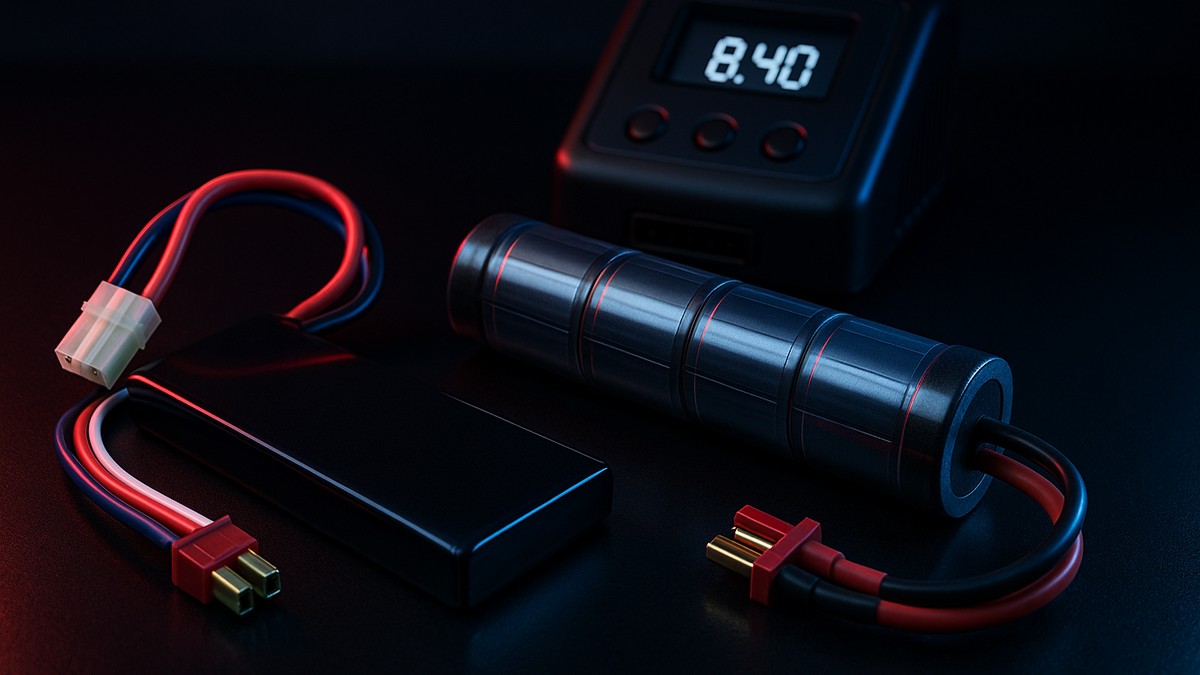
Hey there, fellow RC enthusiasts! If you’re anything like me, you live for that rush of a speeding RC car, the dirt flying, the precise turns, and maybe even a few epic jumps. But let’s be honest, the heart of all that action isn’t the motor or the chassis – it’s the battery! Whether you’re a seasoned basher, a competitive racer, or a parent looking to ignite that spark in your kid (ages 6-14 are prime time for this!), understanding your power source is crucial. Today, we’re diving deep into the ultimate showdown: LiPo vs NiMH. Which one delivers the speed? Which one offers the longest run-time? And most importantly, which one is right for YOU and your RC adventures? Let’s get charged up and find out!
LiPo vs NiMH: The Core Differences
At a fundamental level, LiPo (Lithium Polymer) and NiMH (Nickel-Metal Hydride) are two distinct battery chemistries, each with its own personality on the track or in the backyard. Think of it like comparing a powerful sports car to a reliable pickup truck – both get the job done, but in very different ways.
Nickel-Metal Hydride (NiMH): The Reliable Workhorse
NiMH batteries have been the backbone of the RC world for decades, and for good reason. They are the go-to choice for many entry-level RC vehicles like those from LaTrax and some 1/16 or 1/10 scale Traxxas models, and often come included with Ready-to-Run (RTR) kits.
- Pros:
- Durability: They’re tough! NiMH batteries can take a fair amount of abuse and are less prone to catastrophic failure if punctured or mishandled compared to LiPo.
- Safety: Generally considered safer. They don’t typically “vent with flame” or swell up dangerously like LiPo batteries can if abused. This makes them excellent for younger drivers.
- Ease of Use: Charging is simpler, and storage requirements are less strict. You don’t need a special “balance charger” or worry about specific storage voltages.
- Cost-Effective: Typically less expensive to buy upfront, and the associated chargers are also more budget-friendly.
- Cons:
- Lower Power Density: For the same size and weight, NiMH offers less power and run-time compared to LiPo.
- “Memory Effect”: While not as severe as older NiCd batteries, NiMH can suffer from a mild memory effect if consistently discharged to the same level before recharging. Full cycles are best.
- Voltage Sag: They tend to lose voltage more rapidly during use, meaning your car might feel slower towards the end of a run.
- Slower Charging: Generally take longer to charge than LiPo batteries.
- Ideal Use Cases:
- Beginners and younger hobbyists (6-14 years old).
- Casual backyard bashing with brands like Traxxas (e.g., Rustler, Slash with brushed motors) or Redcat Racing.
- When safety and simplicity are the top priorities.
Lithium Polymer (LiPo): The Powerhouse Performer
LiPo batteries are the modern marvels of RC power. If you crave insane speed, relentless acceleration, and longer run-times, LiPo is probably your jam. You’ll find these powering high-performance models from brands like Arrma, Axial, and higher-end Traxxas vehicles.
- Pros:
- High Power Output: They deliver incredible punch and sustained power, making your RC car feel significantly faster and more responsive.
- Longer Run-time: Higher energy density means more capacity for their size and weight, leading to longer driving sessions.
- Consistent Voltage: LiPo batteries maintain their voltage much better throughout the discharge cycle, meaning your car stays fast from start to finish.
- Lightweight: Lighter than NiMH for a comparable power output, which can improve handling and acceleration.
- Cons:
- Safety Concerns: This is the big one. LiPo batteries can be dangerous if punctured, overcharged, over-discharged, or short-circuited. They can swell, catch fire, or even explode. Proper handling, charging, and storage are NON-NEGOTIABLE.
- Strict Charging Requirements: Require a specialized “balance charger” to ensure all individual cells within the pack are charged equally.
- Storage Requirements: Must be stored at a specific “storage voltage” (typically 3.8V per cell) to prolong their lifespan.
- Fragile: More susceptible to damage from impacts.
- Higher Cost: Generally more expensive than NiMH, both for the batteries themselves and the necessary specialized chargers.
- Ideal Use Cases:
- Experienced hobbyists and racers.
- Anyone seeking maximum speed, acceleration, and extended run-time for 1/10 scale and larger vehicles.
- High-performance bashers (Arrma 3S/4S/6S lineup) or competitive racing.
Important Safety Note for LiPo: Always charge LiPo batteries in a fire-safe LiPo bag or container, never leave them unattended while charging, and never use a damaged or puffed LiPo battery. Supervise younger users closely if they are using LiPo.
Digging Deeper: Understanding the Specs
Beyond the chemistry, there are key numbers on battery packs that tell you a lot about their performance. Understanding these specs is crucial for choosing the right battery for your RC car, whether it’s a 1/16 LaTrax Teton or a 1/8 scale Arrma Kraton.
Voltage (V) – The Speed Factor
Voltage dictates the top speed and raw power your RC car can achieve. More voltage generally means more RPM for your motor and thus, more speed!
- NiMH: These are typically rated in total voltage, or by the number of cells. Each NiMH cell is approximately 1.2V. So, a 6-cell NiMH pack is 7.2V (6 x 1.2V), and a 7-cell pack is 8.4V.
- LiPo: LiPo batteries are rated in “S” numbers, where “S” stands for cells in series. Each LiPo cell has a nominal voltage of 3.7V (fully charged at 4.2V).
- 2S LiPo: 7.4V (perfect for many 1/10 brushed and some brushless systems, or upgrading 1/16 scale models like Traxxas Mini E-Revo).
- 3S LiPo: 11.1V (common for 1/10 scale brushless systems, like Traxxas Slash VXL or Arrma Senton 3S BLX, delivering serious speed).
- 4S LiPo: 14.8V (for bigger, faster 1/8 or 1/7 scale vehicles).
- 6S LiPo and beyond: 22.2V (for extreme, large-scale vehicles, like the Arrma Kraton 6S or Traxxas X-Maxx).
Pro Tip: Always check your RC vehicle’s manual or product page to see its maximum supported voltage (e.g., “2S LiPo compatible” or “3S LiPo ready”). Exceeding this can fry your electronics!
Capacity (mAh) – The Run-time Factor
Measured in milliampere-hours (mAh), capacity tells you how much “fuel” your battery holds. Higher mAh means longer run-times between charges.
- Common capacities range from 2000mAh for smaller 1/18 scale vehicles to 5000mAh, 6000mAh, or even 8000mAh for larger 1/10 or 1/8 scale bashers.
- For example, a 5000mAh battery will theoretically run twice as long as a 2500mAh battery under the same conditions.
Discharge Rate (C-Rating) – The Punch Factor (LiPo only)
The C-rating is unique to LiPo batteries and indicates how quickly the battery can safely discharge its power. A higher C-rating means more “punch” and sustained power delivery, especially under heavy acceleration or load.
- C-rating is multiplied by the battery’s capacity to give its maximum continuous discharge current (Amps). For example, a 5000mAh (5 Amp-hour) 50C LiPo can theoretically deliver 250 Amps continuously (5 Ah x 50C = 250A).
- For most general bashing and even light racing, a 30C to 50C LiPo is usually sufficient. Extreme racers might go higher, but it’s often overkill for general use and increases cost.
- Don’t obsess over super high C-ratings for casual use; a good 50C is plenty for most 1/10 scale brushless setups.
What to Look For: Key Features Beyond Chemistry
Choosing a battery isn’t just about LiPo or NiMH; it’s about compatibility, safety, and longevity. Here are a few other critical aspects to consider:
- Connectors: This is vital! Make sure the battery connector matches your RC car’s Electronic Speed Controller (ESC). Common types include:
- Traxxas (iDTM / EZ-Peak Compatible): Found on many Traxxas vehicles, known for secure connection and often smart charging features.
- Deans (T-Plug): A popular, compact, high-current connector.
- EC3/EC5: Spektrum’s connectors, with EC5 for higher current applications.
- XT60/XT90: Very common in the broader RC world, robust and easy to use.
- JST: Smaller connectors, typically for micro-RC or low-power applications (e.g., LaTrax models often use these).
You might need an adapter if your battery’s connector doesn’t match your ESC, but direct matching is always best for efficiency and reliability. - Physical Size & Fit: Not all batteries fit all battery trays! Check the dimensions of the battery bay in your RC car (e.g., a Traxxas Slash or an Arrma Senton) and compare them to the battery’s dimensions before buying. This is especially true for hard-case LiPo batteries.
- Chargers:
- NiMH Chargers: Simpler, often come with RTR kits. Can be basic wall chargers or faster peak-detection chargers.
- LiPo Chargers (Balance Chargers): Absolutely essential for LiPo. These chargers monitor and charge each cell within the pack individually to ensure they stay balanced, which is crucial for safety and battery lifespan. Many good chargers are multi-chemistry, meaning they can charge both LiPo and NiMH. Brands like Spektrum (Smart chargers) and Traxxas (EZ-Peak chargers) offer excellent, user-friendly options.
- Safety Features (LiPo): Besides a balance charger and LiPo bag, many ESCs have a “low voltage cutoff” (LVC) feature. This automatically stops the car or reduces power when the LiPo battery reaches a safe minimum voltage, preventing over-discharge and damage to the battery. Ensure this is enabled if running LiPo!
Making the Right Choice: Scenarios & Recommendations
Now that we’ve covered the ins and outs, let’s break down which battery makes sense for different RC enthusiasts.
For Beginners & Young Drivers (6-14)
NiMH is king here, hands down. Its durability and forgiving nature make it perfect for learning the ropes without the stress of complex safety protocols. Many 1/16 and 1/10 scale vehicles, like the Traxxas LaTrax lineup, 2WD Slash, or Stampede, come ready for NiMH and offer plenty of fun at that speed. They’re robust enough to handle the inevitable bumps and crashes that come with spirited driving.
- Recommendation: A 7-cell (8.4V) NiMH pack with a capacity of 3000-4000mAh. This will give a good balance of power and run-time without overwhelming a new driver. Look for packs from reliable brands like Traxxas or Venom that fit your specific model.
For Casual Bashers & Hobbyists
Once you’ve got some experience and understand the basics, upgrading to LiPo is a game-changer. The extra punch and extended run-time breathe new life into your vehicle. This is where 2S or 3S LiPo comes into play, especially for 1/10 scale brushless systems from Arrma (e.g., Typhon 3S) or Traxxas (e.g., Rustler VXL).
- Recommendation: For 1/10 scale, a 2S or 3S LiPo hard-case pack (to protect against impacts) with 5000mAh capacity and a 50C discharge rating. Ensure your ESC has LiPo cutoff enabled. Brands like Gens Ace, Spektrum, and Zeee offer great performance and reliability.
For Serious Speed Freaks & Racers
If you’re chasing podium finishes or mind-bending speeds, LiPo is your only option. Racers demand consistent, high-power delivery, and bashers tackling colossal jumps or pushing their 1/8 scale Axial or Arrma vehicles to their limits need the raw grunt of 4S or even 6S LiPo. At this level, quality matters immensely for performance and safety.
- Recommendation: High-capacity (5000mAh+) 4S or 6S LiPo packs with high C-ratings (60C+) from top-tier brands. These are often used in competitive racing or extreme bashing machines like the Arrma Kraton or Traxxas X-Maxx. You’ll likely need multiple packs for extended sessions.
Top Picks: My Go-To Battery Recommendations
Based on my experience, here are a few types of batteries and brands that consistently deliver for various applications, keeping in mind durability, performance, and value.
- The Reliable Beginner’s Pack (NiMH): A 7-cell 8.4V 3300mAh NiMH pack with a Traxxas connector. This is ideal for upgrading most brushed 1/10 scale Traxxas vehicles, offering a noticeable bump over the standard 6-cell packs. It’s a solid, safe choice for the younger hobbyist or anyone who values simplicity.
- The Versatile All-Rounder (2S LiPo): A 2S 7.4V 5200mAh 50C hard-case LiPo with an XT60 or EC3 connector. This is a fantastic general-purpose upgrade for many 1/10 scale brushed or mild brushless setups (like a Redcat Gen8 or an Axial SCX10). The hard case protects it during tumbles, and the capacity gives good run-time. Look for brands like Gens Ace or Zeee for consistent quality.
- The Speed Demon’s Standard (3S LiPo): A 3S 11.1V 5000mAh 50C+ hard-case LiPo, often with an EC5 or Traxxas connector. This is the sweet spot for many popular 1/10 scale brushless bashers like the Arrma Typhon 3S BLX, Senton 3S BLX, or Traxxas Slash VXL. It delivers a thrilling boost in speed and power. Spektrum Smart LiPo batteries are a great choice here for their integrated technology with compatible chargers.
- The Heavy Hitter (4S/6S LiPo): For those stepping into serious 1/8 scale territory with vehicles like the Arrma Kraton 4S/6S or Outcast 4S/6S, a pair of 2S or 3S LiPo batteries (depending on whether you’re running 4S or 6S total) with high capacity (6000mAh+) and a high C-rating (60C+). Using two packs rather than one large one often helps with weight distribution and allows for more flexibility. Ensure your connectors match – EC5 is very common for these applications.
FAQ: Your Burning Questions Answered
Q1: Can I use a LiPo charger for NiMH batteries?
A: Yes, many modern, multi-chemistry balance chargers are designed to handle both LiPo and NiMH batteries. Just be sure to select the correct battery type and charging parameters on your charger’s menu before you start. Never try to charge a LiPo with a NiMH-only charger, or vice-versa, as this can be dangerous.
Q2: How long do RC car batteries last, both in run-time and lifespan?
A: Run-time varies wildly based on battery capacity (mAh), motor efficiency, vehicle weight, terrain, and driving style. A 5000mAh LiPo might give you 20-30 minutes of aggressive bashing, while a 3000mAh NiMH might give 10-15 minutes in a similar vehicle. As for lifespan, a well-maintained LiPo can last 100-300 charge cycles or 1-3 years. NiMH batteries can last even longer if properly maintained, often reaching several years of use, though their performance might degrade over time.
Q3: What does it mean if my LiPo battery is “puffed”?
A: A “puffed” LiPo battery is one where the cells have swelled and expanded, making the battery feel soft or visibly bloated. This is a sign of internal damage, often due to overcharging, over-discharging, overheating, or physical impact. A puffed LiPo battery is extremely dangerous and should be immediately removed from use, discharged safely (e.g., with a specialized discharger or a resistor bulb in a fire-safe location), and properly disposed of according to local regulations (never in regular trash!).
Q4: Can I use a LiPo battery in an RC car that originally came with a NiMH battery?
A: Often, yes, but with crucial caveats!
- Check ESC Compatibility: Your ESC (Electronic Speed Controller) MUST be LiPo compatible and have a “low voltage cutoff” (LVC) feature that you enable. This prevents over-discharging the LiPo, which can damage it beyond repair and pose a safety risk.
- Motor Limits: If your car has a brushed motor, it might struggle or overheat with the increased power of a LiPo, especially if you jump from a 6-cell NiMH to a 3S LiPo. Start with a 2S LiPo first.
- Physical Fit: Ensure the LiPo battery physically fits in the battery tray and that the connectors match.
- Drivetrain Strength: More power means more stress on the drivetrain (gears, differentials, axles). If you’re going from NiMH to 3S LiPo on a vehicle designed for NiMH, you might start breaking parts more often. Upgrades might be necessary!
So there you have it, folks! The world of RC car batteries, broken down for speed demons, backyard bashers, and new drivers alike. Choosing between LiPo and NiMH ultimately comes down to your priorities: safety and simplicity for NiMH, or raw power and extended run-time for LiPo. No matter your choice, always remember that proper battery care and safety are paramount to keeping the fun going. Get out there, charge those batteries, and have a blast!
Explore More RC Guides & Gear
Ready to dive deeper? Check out these related guides and shop our hand-picked RC collection:
Similar Truck Picks
🏁 Don't Overpay for Your Kid's Next RC Toy
Get our free Dad's RC Buying Guide + weekly deal alerts on the best RC cars, trucks & drones. No spam, just the good stuff.