Best RC Toys for 10-Year-Olds: Top Picks for 2026

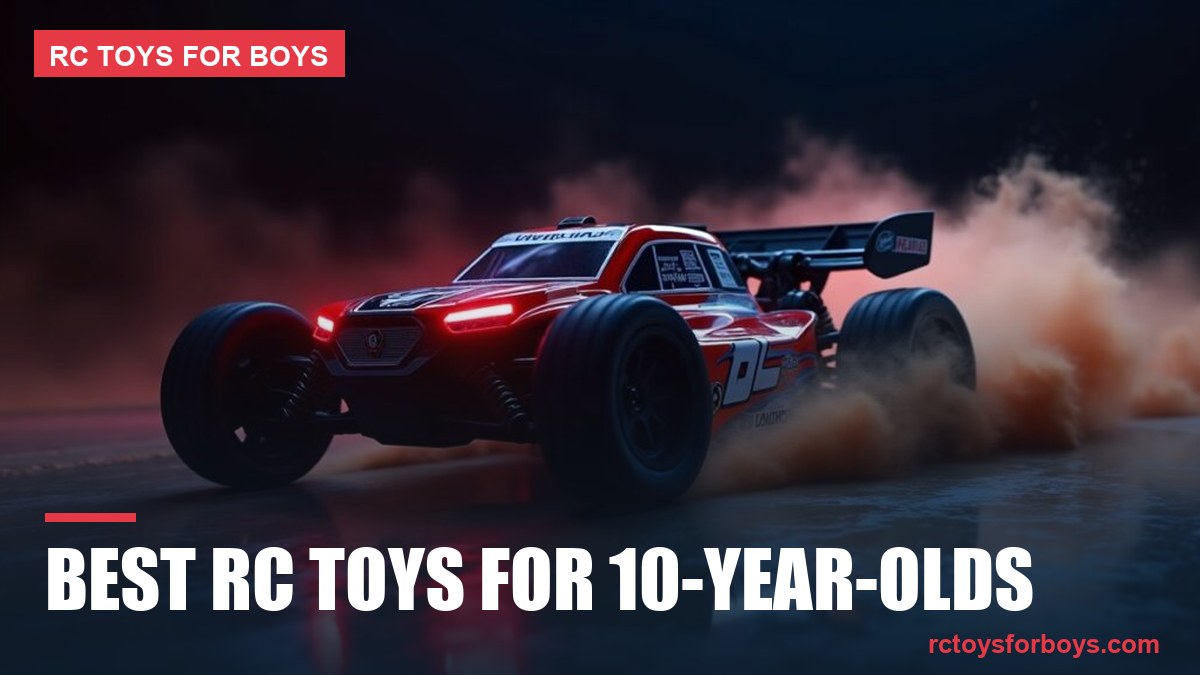
Alright, fellow RC fanatics and parents looking to level up their kid’s playtime – let’s talk about something truly exciting. We’re moving beyond the simple, short-lived toy-grade RC cars that gather dust after a week. We’re talking about igniting a genuine passion, fostering skills, and creating lasting memories with hobby-grade RC vehicles. If you have a 10-year-old who’s shown even a flicker of interest in anything with wheels and a remote, you’ve hit the sweet spot. This age is perfect for diving headfirst into the incredible world of high-performance radio control.
Beyond the Toy Store: Stepping Up to Hobby-Grade RC
The jump from a toy-grade RC car to a hobby-grade machine is like going from a tricycle to a dirt bike. Toy-grade RCs are cheap, cheerful, and ultimately disposable. They’re slow, fragile, and if something breaks, it’s usually game over. Hobby-grade RCs, however, are a different beast entirely. They are engineered for performance, durability, and most importantly, repairability and upgradability.
For a 10-year-old, this transition is monumental. It’s not just about speed; it’s about understanding mechanics, problem-solving when something breaks (and it will!), learning patience, and developing driving skills that translate to real-world hand-eye coordination. At ten, kids are ready for that responsibility. They can grasp concepts like maintenance, battery safety, and the nuances of controlling a powerful machine. Plus, the sheer thrill of a hobby-grade RC is incomparable – the jumps, the speed, the ability to tackle challenging terrain. This isn’t just a toy; it’s an entry point into a vibrant, engaging hobby.
What to Look For: Navigating the Hobby-Grade Landscape
So, you’re ready to make the leap. But with so many options, how do you choose? Here’s what an experienced hobbyist considers when picking a rig for a young enthusiast:
Durability is King
Let’s be real: a 10-year-old will crash it. A lot. That’s part of the fun! So, the first priority is durability. Look for:
- Robust Chassis: Strong plastic or even aluminum chassis can withstand impacts.
- Flexible Parts: Suspension arms and bumpers that can flex rather than snap are crucial. Brands like Traxxas and Arrma are renowned for their incredible resilience and readily available spare parts. Redcat also offers robust entry-level options.
- Waterproof Electronics: Motors, ESCs (Electronic Speed Controllers), and servos that are sealed against splashes mean the fun doesn’t stop if there’s a puddle or some morning dew.
Ease of Use & Maintenance
While we want them to learn, the initial experience shouldn’t be overly complicated.
- Brushless vs. Brushed Motors: For a true beginner, a brushed motor system is often a great starting point. They are less powerful, less expensive, and easier to manage. Many hobby-grade RCs come with brushed systems that can later be upgraded to faster, more efficient brushless setups as skills improve.
- Battery Types: NiMH (Nickel-Metal Hydride) batteries are generally safer and simpler to charge, making them ideal for beginners. LiPo (Lithium Polymer) batteries offer more power and longer run times but require specific chargers and more careful handling. Start with NiMH and consider LiPo under supervision later.
- Parts Availability: Can you easily find replacement parts at your local hobby shop or online? Brands like Traxxas, Arrma, and LaTrax excel here.
Performance & Control
This is where the excitement truly comes in!
- Speed and Handling: While top speed isn’t everything, a responsive RC that handles well adds to the fun. Look for models with adjustable settings (like “training mode” on some Traxxas models) to dial back the power for learning.
- 2.4GHz Radio System: This ensures reliable, interference-free control and allows multiple RCs to run simultaneously without cross-talk.
- Scale Sizes:
- 1/10 Scale: This is the most popular and versatile size. Great for backyard bashing, parks, and even entry-level racing. Offers a good balance of performance and presence.
- 1/16 or 1/18 Scale: Smaller and often more affordable. Excellent for tighter spaces, indoor use, or as a stepping stone. Brands like LaTrax (a Traxxas sub-brand) offer great options here.
- 1/24 or 1/28 Scale: Primarily for indoor crawling or small-scale adventures, like the Axial SCX24. Great for precision and problem-solving in a compact package.
Upgrade Potential
A true hobby-grade RC grows with its owner. The ability to upgrade motors, ESCs, suspension components, or even just swap out body shells keeps the interest alive for years. This modularity is a hallmark of the hobby.
Igniting Their Passion: Top RC Categories for 10-Year-Olds
Different RC types offer different experiences. Here are some of the best categories for a young enthusiast:
Monster Trucks
The quintessential RC experience for many. Monster trucks are big, rugged, and built for aggressive driving (bashing).
- Why for 10-Year-Olds: Their high ground clearance and large tires make them forgiving over varied terrain – grass, dirt, small obstacles are no problem. They absorb bumps and crashes well, making them ideal for beginners who are still refining their driving skills. The “cool factor” is undeniable.
- Key Characteristics: Large tires, high suspension travel, usually 2WD or 4WD.
- Brands to Consider: Traxxas (Stampede, Rustler in monster truck guise), Arrma (Granite), Redcat (Everest Gen7 for a monster truck/crawler hybrid).
Short Course Trucks (SCTs)
These mimic their full-size counterparts used in off-road racing. They have realistic bodies that cover the wheels.
- Why for 10-Year-Olds: SCTs offer a fantastic blend of bashing capability and genuine racing performance. The large body shell helps protect the wheels and suspension in minor bumps, which is a bonus for beginners. They handle jumps well and are a blast on loose dirt.
- Key Characteristics: Realistic body shells, excellent handling, often 2WD or 4WD.
- Brands to Consider: Traxxas (Slash is the undisputed king here).
Rock Crawlers/Trail Trucks
These aren’t about speed, but about precision, articulation, and conquering challenging terrain at slow speeds.
- Why for 10-Year-Olds: Crawlers teach patience, problem-solving, and precise throttle control. They’re fantastic for outdoor adventures in rough, rocky areas or even creating indoor obstacle courses. The slower speeds mean less damage in crashes, making them very durable for learning.
- Key Characteristics: High articulation, low gearing for torque, usually 4WD, often weighted for stability.
- Brands to Consider: Axial (SCX24 for micro, SCX10 for larger scale), Redcat (Everest Gen7).
Buggies
Sleek, fast, and agile, buggies are built for speed and handling on loose surfaces like dirt tracks.
- Why for 10-Year-Olds: If speed is the primary thrill, a buggy delivers. They are quick to accelerate and handle corners with precision, offering a different kind of driving challenge than monster trucks. They teach fine motor control and quick reflexes.
- Key Characteristics: Low-slung chassis, open wheels, often 2WD or 4WD.
- Brands to Consider: Arrma (Typhon), Traxxas (Bandit).
Ultimate Picks: Specific Recommendations for Young Enthusiasts
Based on durability, performance, upgradeability, and overall fun factor for a 10-year-old, here are some top recommendations:
-
Traxxas Slash 2WD (1/10 Scale Short Course Truck):
This is arguably the most recommended entry-level hobby-grade RC, and for good reason. The Slash is incredibly durable, parts are universally available, and it comes with a “training mode” that cuts power by 50% for beginners. It’s fantastic for backyard bashing, driving in parks, and even offers a taste of racing. It’s a platform that can be upgraded endlessly as skills grow.
-
Arrma Granite Mega 4×2 (1/10 Scale Monster Truck):
Arrma is known for its “bash-proof” designs, and the Granite Mega is an excellent example. It’s a tough, rear-wheel-drive monster truck that offers a thrilling driving experience. It’s robust, relatively easy to maintain, and its brushed motor system is perfect for learning. The 4×2 (2-wheel drive) setup can also teach more throttle control. If you want 4WD, look at the Granite 4×4 Mega.
-
LaTrax Teton or Prerunner (1/18 Scale Monster Truck/Buggy):
From Traxxas’s sub-brand, LaTrax offers smaller, more affordable, and incredibly durable options. The Teton is a mini monster truck, while the Prerunner is a short course truck. Both are 4WD, waterproof, and perfect for smaller yards, indoors, or as a more compact entry point into the hobby. They handle surprisingly well for their size and are very robust.
-
Axial SCX24 (1/24 Scale Rock Crawler):
This micro crawler is a masterpiece. It’s small enough to run on a desk or living room floor, but it’s a true hobby-grade rock crawler in every sense. It teaches incredible precision and patience, and building indoor obstacle courses is a fantastic creative activity. It’s a great way to introduce the technical side of RC without the high speeds.
-
Redcat Everest Gen7 (1/10 Scale Crawler/Trail Truck):
If your child is more interested in technical driving and exploring trails than outright speed, the Everest Gen7 is an excellent value. It’s a capable, hobby-grade crawler that’s ready for adventures right out of the box. It offers excellent articulation and a robust design, perfect for climbing over rocks and navigating rough terrain.
Tips for Parents and Mentors: Fostering the Hobby
Your role as a mentor is crucial in nurturing this passion.
- Start Simple, Allow Growth: Don’t overwhelm them with the fastest, most complicated rig right away. A brushed motor system is perfectly adequate, with the brushless upgrade waiting as a future milestone.
- Emphasize Safety: Especially with LiPo batteries, teach proper charging, storage, and handling. Always supervise charging.
- Teach Maintenance: Show them how to clean the vehicle after a run, check for loose screws, and keep the gears free of debris. This instills responsibility and understanding.
- Get Involved: Run alongside them, build obstacle courses, or even get your own RC! It’s a fantastic bonding activity.
- Join a Community: Look for local RC clubs or tracks. Engaging with other hobbyists can be incredibly motivating and provide opportunities to learn and even race.
- Extra Batteries are Key: Nothing kills the fun like a dead battery. Always have at least one spare, fully charged battery ready to go.
- Embrace the Learning Curve: Things will break. That’s part of the hobby. It’s an opportunity to learn how to fix things, understand components, and upgrade.
Frequently Asked Questions (FAQ)
Q1: Should I get a brushed or brushless RC for a 10-year-old?
For most 10-year-olds new to hobby-grade RC, a brushed motor system is highly recommended. They are less powerful, more forgiving, and typically more affordable. Many hobby-grade RCs are designed to be upgraded to brushless later, providing a clear progression path as their skills improve and they want more speed.
Q2: NiMH or LiPo batteries for a beginner?
NiMH batteries are the safest and simplest option for a beginner. They are less volatile and require less specialized charging equipment. LiPo batteries offer superior performance (more power, longer run times) but demand specific chargers and careful handling, storage, and disposal due to their potential fire risk. Start with NiMH and consider LiPo under strict adult supervision once they’ve mastered the basics and understand the risks.
Q3: Are hobby-grade RCs really durable enough for a 10-year-old?
Absolutely! Hobby-grade RCs are designed with durability and repairability in mind, a stark contrast to toy-grade vehicles. While parts will inevitably break (it’s part of the fun and learning!), they are made to withstand significant abuse and can be easily replaced, often with stronger aftermarket components. Brands like Traxxas and Arrma are particularly known for their robust designs and wide availability of spare parts.
Q4: What essential tools will we need to get started?
You won’t need much initially. Most hobby-grade RCs come with a basic wrench for wheels. Beyond that, a good set of metric hex drivers (often 1.5mm, 2.0mm, 2.5mm) is essential for most screws. A small Phillips head screwdriver, needle-nose pliers, and a small pair of wire cutters can also be very useful for general maintenance and minor repairs.
Diving into the world of hobby-grade RC with a 10-year-old is more than just buying a cool toy; it’s an investment in a journey. It’s about fostering curiosity, developing practical skills, and creating countless hours of shared excitement and adventure. So, go ahead, pick out that first serious rig, hit the dirt, and watch their passion ignite. The tracks are calling!
Similar Car Picks
🏁 Don't Overpay for Your Kid's Next RC Toy
Get our free Dad's RC Buying Guide + weekly deal alerts on the best RC cars, trucks & drones. No spam, just the good stuff.