Best Gas RC Cars: Top Nitro & Gas-Powered Picks for 2026

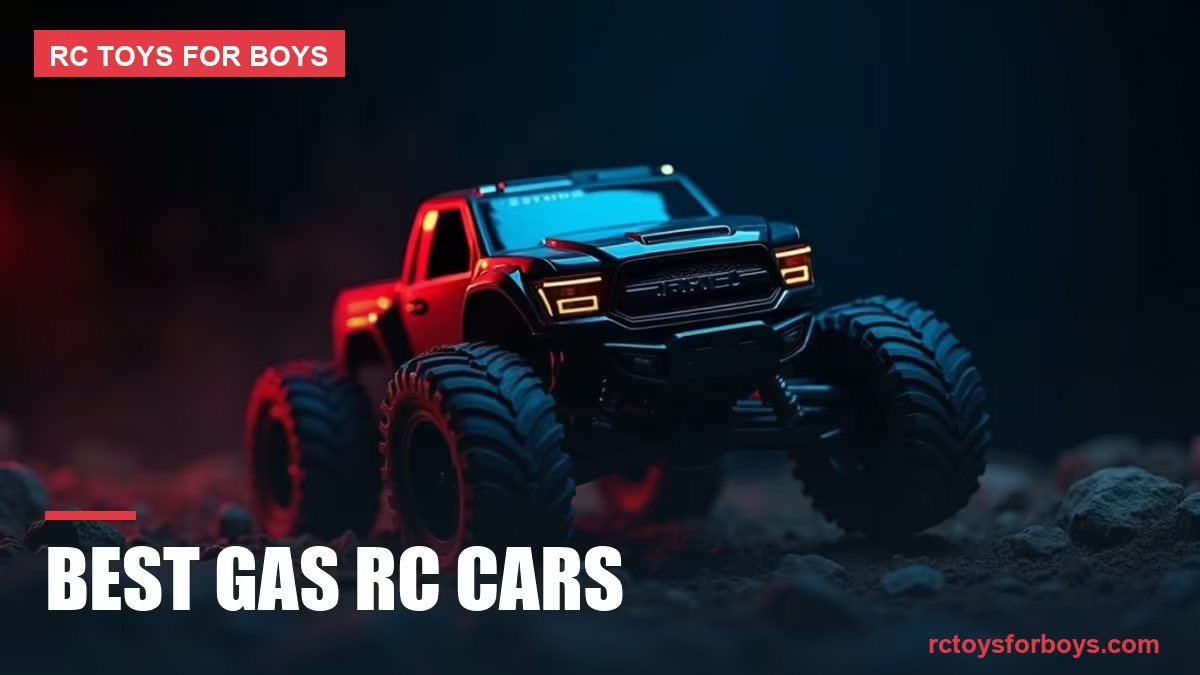
If you have spent any time around this hobby, you have probably stood next to someone running a nitro buggy and felt it in your chest: the smell of the exhaust, the high-pitched scream of the engine, the little puff of blue smoke as it rips past. That sensory hit is exactly why people go looking for the best gas RC cars. These machines trade the quiet convenience of batteries for something closer to a real vehicle, and for a certain kind of enthusiast there is nothing else like it. This guide walks through what gas and nitro RC cars actually are, the main types, what to look for, and the honest maintenance reality before you spend your money.
What “Gas RC Cars” Really Means
First, a bit of terminology, because the hobby muddies it constantly. When most people say “best gas RC cars,” they are usually talking about nitro cars. Nitro engines run on a methanol-based fuel blended with nitromethane and lubricating oil. They are small two-stroke combustion engines, typically displacing well under a cubic inch, and they power the majority of fuel-burning RC vehicles you will see at a track.
True gas RC cars are a separate, larger category. They run a gasoline-and-oil mix in a bigger engine, much like a weed trimmer or a small chainsaw, and they tend to be found in large-scale vehicles. Gas rigs run longer on a tank and use cheaper pump-style fuel, but they are bulkier and pricier up front. For the rest of this guide, I will use “gas” loosely to cover both fuel-burning types, and call out nitro specifically where it matters.
The shared appeal is the same: a real engine you tune by hand, an exhaust note you can hear across a field, and refueling in seconds instead of waiting on a charger. If you want the full breakdown of how this stacks up against batteries, our piece on nitro vs electric RC cars goes deep on the trade-offs.
Why People Love the Combustion Feel
- Sound and smoke. A tuned engine has a voice. No electric setup replicates that scream and the smell of burnt nitro.
- Mechanical engagement. You are pull-starting, setting the idle, tuning the carburetor needles, and reading how the engine responds. It is a hobby for people who like to wrench.
- Fast refuels. When the tank runs dry, you top it off and keep going. No swapping packs, no charge cycles.
- Realism. The way fuel power builds and the engine note climbs feels far more like a scaled-down real vehicle.
The Main Types of Gas and Nitro RC Cars
Fuel power shows up across most of the same body styles you find in the electric world. Here are the categories worth knowing before you choose.
Nitro Buggies
Off-road buggies are the classic nitro platform. They are light, nimble, and built to launch off jumps and corner hard on dirt. This is the category most associated with competitive racing, where tuning and driving skill genuinely separate the field. If you picture yourself at a local dirt track on race day, a buggy is the natural starting point.
Monster Trucks
Nitro and gas monster trucks are the showoffs of the bunch: tall suspension, oversized tires, and the muscle to chew through rough terrain and big jumps. They are forgiving about where you run them and tremendously fun in an open lot or a backyard with some space. Gas-powered versions in particular tend toward larger scales, which means real presence and longer run times.
On-Road Cars
On-road nitro cars are built for smooth, hard surfaces: parking lots, paved tracks, and dedicated on-road circuits. Low to the ground with grippy tires, they reward clean, fast driving and a well-dialed engine. They are less tolerant of grass and gravel, so you need the right surface, but on the right pavement they are seriously quick and satisfying.
Short-Course and Truggies
Sitting between buggies and monster trucks, truggies pair a buggy-style chassis with bigger tires and more ground clearance, while short-course trucks bring scale realism and wider, protective bodies. Both make great all-around fuel rigs if you want one vehicle that handles mixed terrain without committing to a pure race platform.
Gas and Nitro RC Car Types Compared
Here is a quick side-by-side to help you match a type to how and where you plan to run. Treat these as general tendencies, not hard rules.
| Type | Best Surface | Strengths | Trade-offs | Good For |
|---|---|---|---|---|
| Nitro Buggy | Dirt / off-road track | Agile, fast, race-ready | Less durable on hard impacts | Competitive racers |
| Monster Truck | Mixed / open terrain | Forgiving, big air, durable | Bulky, less precise | Bashers and yard runners |
| On-Road Car | Pavement / smooth track | High top speed, precise | Needs clean surfaces | Speed and track enthusiasts |
| Truggy / Short-Course | Mixed terrain | Versatile all-rounder | Jack-of-all-trades feel | One-rig hobbyists |
What to Look For When Buying
Once you have a type in mind, a few practical factors separate a rewarding purchase from a frustrating one.
- Engine size and tuning access. Larger engines generally make more power but burn more fuel. More important for a first rig is easy access to the carburetor needles so you can tune without fighting the body and chassis.
- Starting method. Some engines use a pull-start cord, others a recoil or an onboard system. Know what you are getting and how reliably it fires when cold.
- Build quality of the drivetrain. Look at the quality of the gears, bearings, and suspension. Fuel rigs vibrate and take abuse, and cheap internals wear fast.
- Parts availability. This is the one beginners skip and regret. You will break things. Make sure spare parts and replacement engine components for your specific model are easy to find before you buy.
- Ready-to-run versus kit. A ready-to-run package gets you going quickly. A kit teaches you the machine intimately but demands patience and assembly skill.
If you are still comparing platforms across the board, browse the full range of RC cars to see how fuel models sit next to the electric options.
The Maintenance Reality (Read This Before You Buy)
I am going to be the dad who tells you the truth here: a gas or nitro car is a commitment, not a toy you unbox and forget. The engine is the heart of the thing, and it needs respect.
A new engine has to be broken in through several careful heat cycles before you can run it hard, and rushing that step can wreck it. Every engine needs tuning, adjusting the fuel-air mixture with the carburetor needles, and tuning shifts with temperature, altitude, and humidity. A setting that runs perfectly on a cool morning may need a tweak by afternoon.
After each session you should expect to:
- Run the engine until the fuel tank is empty, or drain it so fuel does not sit in the lines.
- Wipe down the chassis, which collects oily residue, dirt, and exhaust film.
- Check the air filter, since dirt reaching the engine is a fast way to ruin it.
- Inspect for loose screws and worn parts, because vibration shakes things loose over time.
- Apply after-run oil to protect internals between sessions.
None of this is hard once it becomes routine, and plenty of hobbyists find the ritual genuinely enjoyable. But it is real time and real money in fuel, glow plugs, and spare parts. If that sounds like a chore rather than part of the fun, an electric setup will make you happier.
Who Gas and Nitro RC Cars Are Actually For
Let me be honest about fit, because these are not for everyone. Gas and nitro RC cars suit the patient hobbyist who enjoys the mechanical side as much as the driving, who does not mind getting their hands oily, and who has somewhere appropriate to run a loud, fast machine.
They are not a good first RC for young kids. The fuel handling, the hot engine and exhaust, the tuning, and the constant upkeep are a lot for a child, and the noise and speed can be genuinely intimidating. For a young beginner, a durable electric model is the smarter call almost every time. Fuel power is best treated as a step you graduate into once you know you love the hobby.
If you are an adult weighing your options more broadly, our roundup of the best RC cars for adults covers both fuel and electric picks and can help you decide where to land before committing to the maintenance lifestyle.
Frequently Asked Questions
Are nitro and gas RC cars the same thing?
Not exactly. Nitro cars run a methanol fuel blended with nitromethane and oil in small two-stroke engines, while true gas cars run a gasoline-and-oil mix in larger engines, usually in bigger-scale vehicles. People often lump both under “gas,” but they use different fuel and engines.
Are gas RC cars good for beginners?
They can be for an adult who is genuinely interested in the mechanical side and willing to learn tuning and maintenance. They are not ideal as a first RC for young kids or anyone who just wants to drive without upkeep, since they require break-in, tuning, and cleaning after every run.
How much maintenance does a nitro RC car need?
Expect routine care after every session: emptying or draining the fuel, wiping down the chassis, checking the air filter, inspecting for loose screws, and applying after-run oil. The engine also needs proper break-in and ongoing tuning as conditions change.
Are gas RC cars faster than electric?
It depends on the specific models being compared. Fuel power is prized more for its realism, sound, and quick refueling than for guaranteed top speed. Modern electric setups can be extremely fast too, so the choice usually comes down to the experience you want rather than raw speed alone.
Where can I run a gas or nitro RC car?
Match the vehicle to the surface: buggies on dirt tracks, on-road cars on pavement, and monster trucks on mixed or open terrain. Because they are loud and fast, an open area or a dedicated track is best, rather than a tight indoor space or a crowded park.
Gas and nitro models worth looking at
Only 34 of our 3,204 products are petrol or nitro powered — about 1% of the catalogue. That scarcity is the real story: internal combustion is now a specialist choice, not a mainstream one, because brushless electric has taken over (96.4% of products stating a motor type are brushless). What petrol still offers is running time measured in tank refills rather than battery charges, and genuine engine noise.
Biggest and most powerful — QAQQVQ 1:5 45cc Gasoline RC Truck

A 45cc petrol engine in 1:5 scale is a different category of machine — roughly a metre long and heavy enough that it needs genuinely open space and respect. This is the closest RC gets to a small motorbike engine, with run time limited by the fuel tank rather than a battery.
- Scale: 1:5
- Engine: 45cc petrol
- Best for: Experienced adults, large open ground
See specs, current price & buy on Amazon →
Best value in 1:5 petrol — QAQQVQ 1:5 29cc Gasoline Monster Truck

A 29cc two-stroke keeps most of the 1:5 experience at a noticeably lower price. Two-stroke engines need fuel mixed with oil and periodic tuning — that maintenance is part of the hobby rather than a defect.
- Scale: 1:5
- Engine: 29cc two-stroke
- Fuel: Petrol/oil mix
See specs, current price & buy on Amazon →
Best nitro to start with — Traxxas Nitro Slash 1/10 2WD

The most sensible entry into internal combustion. A 1:10 nitro short course truck is far more manageable than a 1:5 petrol machine, and Traxxas parts support is the best in the hobby — which matters more with nitro, because you will be tuning and rebuilding.
- Scale: 1:10
- Fuel: Nitro methanol
- Drivetrain: 2WD
- Radio: TQ 2.4GHz with TSM
See specs, current price & buy on Amazon →
Best for racers — Kyosho Inferno MP10 TKI3 1:8 Nitro Buggy Kit

A competition kit, not a ready-to-run toy: you build it. The Inferno has a long race pedigree, and building it yourself teaches the chassis in a way no RTR can. Budget for a radio, engine accessories and tools.
- Scale: 1:8
- Type: Kit (self-build)
- Drivetrain: 4WD
- Use: Racing
See specs, current price & buy on Amazon →
Should you buy petrol, nitro or electric?
| Electric (brushless) | Nitro | Petrol | |
|---|---|---|---|
| Ease | Charge and drive | Tuning, glow plug, break-in | Mix fuel, pull start |
| Run time | 10–15 min per pack | ~15 min per tank, instant refuel | ~20 min per tank, instant refuel |
| Noise | Near silent | Loud | Very loud |
| Maintenance | Minimal | High | High |
| Where | Anywhere | Open space, not residential | Large open ground only |
| Share of our catalogue | ~99% | ~1% (34 products) | |
Honest summary: for almost everyone, modern brushless electric is faster, cheaper and far less hassle. Choose petrol or nitro because you want the engine — the sound, the tuning, the refuelling — not because you expect it to outperform electric. See fast RC cars for the electric alternative.
Frequently asked questions
Are gas RC cars faster than electric?
Generally no. Modern brushless electric cars accelerate harder and match or beat petrol on top speed. Petrol wins on run time and sound, not outright pace.
What is the difference between gas and nitro RC cars?
Nitro engines burn a methanol-nitromethane fuel and are usually 1:8–1:10 scale. Petrol (gas) engines burn ordinary petrol mixed with oil, are larger (typically 1:5) and run longer per tank.
Are nitro RC cars good for beginners?
No. Engine tuning, break-in and glow-plug maintenance make them a poor first vehicle. Start electric — see our beginner guide — then move to nitro once you want the engine itself.
How much do gas RC cars cost?
Petrol 1:5 models in our catalogue run roughly $1,000–$1,900. Nitro starts nearer $400. Both are far above the $62.58 median for an RC car overall.
RC Toys For Boys is an Amazon Associate and earns from qualifying purchases — see our affiliate disclosure. Figures come from our analysis of all 3,204 catalogue products; see the RC Car Price & Specification Report.
Related: all RC cars · fast RC cars · catalogue data report
Similar Buggy Picks
🏁 Don't Overpay for Your Kid's Next RC Toy
Get our free Dad's RC Buying Guide + weekly deal alerts on the best RC cars, trucks & drones. No spam, just the good stuff.