RTR vs Kit RC Cars: What’s the Difference and Which Is Better?

The Big Decision: Ready-to-Run or Build Your Own?
When shopping for an RC car, you’ll encounter two main formats: RTR (Ready-to-Run) and Kit. Understanding the difference is one of the most important decisions you’ll make as an RC hobbyist. Each has genuine advantages, and the right choice depends on what you enjoy most about the hobby.
What Is RTR (Ready-to-Run)?
An RTR RC car comes fully assembled and includes everything you need to start driving:
- Fully built chassis with all electronics installed
- Transmitter (controller)
- Battery and charger (usually — some are “RTR minus battery”)
- Pre-painted body
You open the box, charge the battery, and you’re bashing within an hour. Browse our RTR RC cars to see the full selection.
RTR Pros:
- Instant gratification — drive the same day you buy
- No assembly skills required
- Everything is guaranteed to work together
- Factory-tuned setup that drives well out of the box
- Usually cheaper total cost vs buying kit + all components separately
RTR Cons:
- You don’t learn how the car works during assembly
- Sometimes includes lower-quality electronics (basic servo, entry-level ESC)
- Less customization during initial build
- Harder to diagnose problems if you didn’t build it
What Is a Kit?
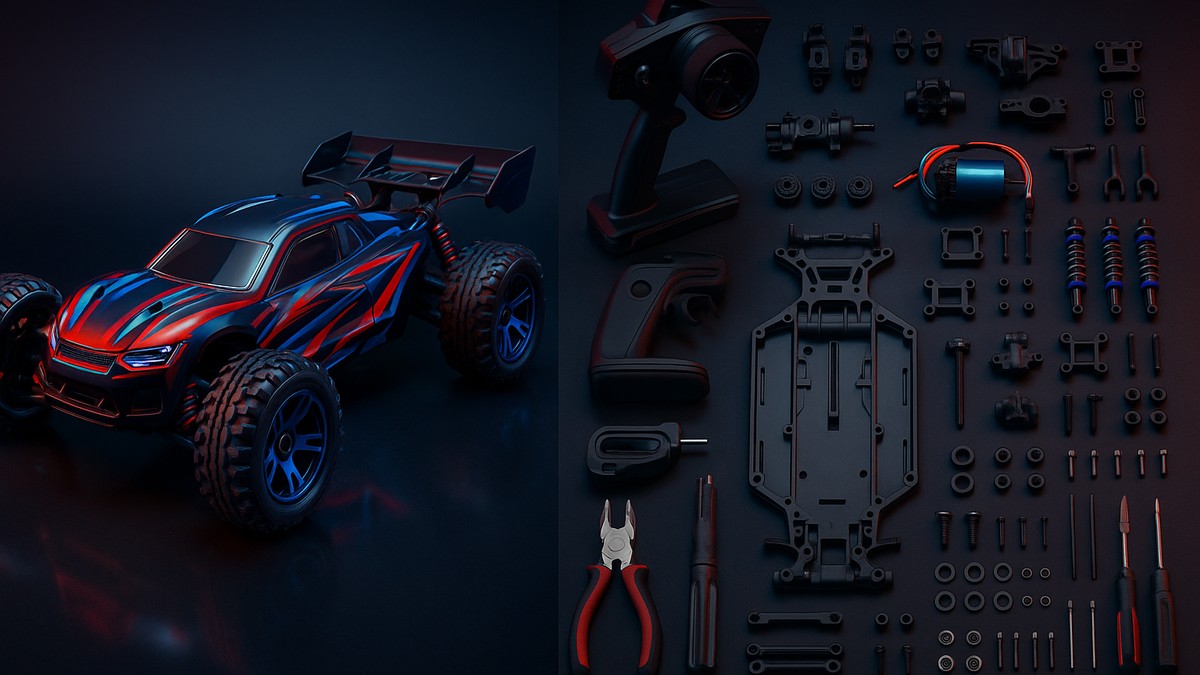
A kit comes as unassembled parts in bags. You build the entire car from the ground up following detailed instructions. Kits typically include:
- All mechanical parts (chassis, suspension, drivetrain, body)
- Hardware (screws, nuts, pins, bearings)
- Decal sheet and window masks
- Instruction manual
What’s NOT included: Motor, ESC, servo, receiver, transmitter, battery, charger, paint, and glue. You buy all electronics separately, which means you choose exactly what goes in your car.
Kit Pros:
- You learn exactly how every part works during assembly
- Choose premium electronics from the start
- Deeper understanding makes troubleshooting and repairs easier
- The build itself is enjoyable — many hobbyists love wrenching as much as driving
- Often better base platform quality (tighter tolerances, better materials)
Kit Cons:
- Requires 5-20+ hours of assembly
- Need basic tools (hex drivers, pliers, hobby knife)
- Total cost is usually higher once you buy all electronics
- Must research and choose compatible electronics
- Delayed gratification — you can’t drive until it’s fully built and painted
Cost Comparison
Here’s a typical cost breakdown for a 1/10 scale truck:
- RTR complete: $250-$400 (everything included)
- Kit + electronics: $150-$200 (kit) + $50-$80 (motor/ESC) + $25-$50 (servo) + $50-$100 (transmitter/receiver) + $25-$50 (battery) + $30-$60 (charger) = $330-$540 total
RTR is almost always cheaper for the same platform. But kit builders get to hand-pick each component for their needs.
Which Should You Choose?
Choose RTR if:
- This is your first RC car
- You want to drive ASAP
- You don’t enjoy assembly or mechanical work
- You’re buying as a gift
- You want the simplest possible experience
Choose a Kit if:
- You enjoy building and wrenching
- You already have electronics from a previous car
- You want to understand your car inside and out
- You want the best possible electronics from day one
- You’re an experienced hobbyist looking for a specific platform
The Best of Both Worlds
Many hobbyists buy RTR first, then eventually build a kit once they’re hooked on the hobby. The RTR teaches you how to drive and what you like; the kit lets you build exactly what you want. It’s not a one-or-the-other decision for your entire RC career.
And remember — even RTR cars can be disassembled, upgraded, and rebuilt. You’ll learn plenty about your car just by maintaining and upgrading it over time. Check our parts and upgrades section for upgrade options.
Start Shopping
Browse our RTR RC cars for ready-to-drive options, or explore our full RC car collection. For brand-specific recommendations, check our Traxxas vs Arrma comparison.
Similar Car Picks
🏁 Don't Overpay for Your Kid's Next RC Toy
Get our free Dad's RC Buying Guide + weekly deal alerts on the best RC cars, trucks & drones. No spam, just the good stuff.