How to Choose Your First RC Car: A Beginner’s Guide

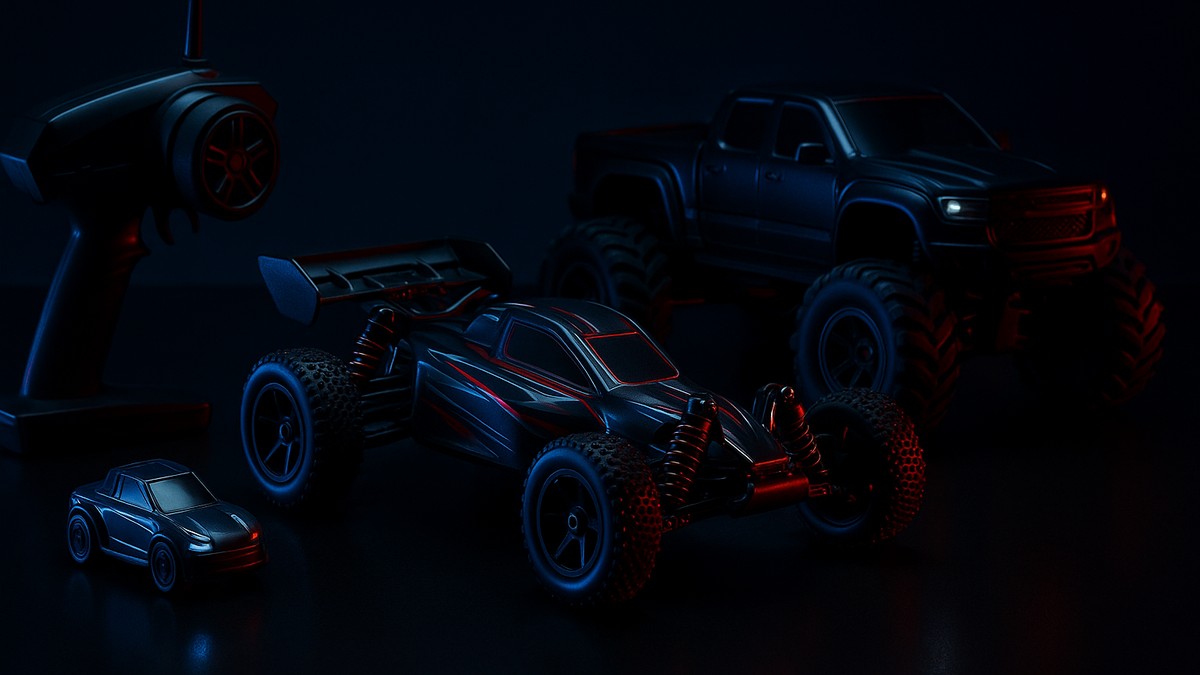
Alright, fellow dads and future RC legends! Get ready to dive headfirst into one of the most exciting, skill-building, and downright fun hobbies you can share with your boys: the world of remote-control cars. This isn’t just about buying a toy; it’s about igniting a passion, learning mechanics, developing driving skills, and most importantly, creating unforgettable memories together. Whether you’re a seasoned hobbyist looking to introduce your son, or both of you are completely new to the scene, this guide will help you pick that perfect first RC car. Let’s gear up and find your next great adventure!
Why RC Cars? More Than Just a Toy!
Before we even talk about wheels and motors, let’s appreciate why RC cars are such a fantastic adventure for dads and boys (ages 6-14 are a sweet spot, but teens love them too!). It’s a hobby that brings tangible benefits beyond the sheer thrill.
- Bonding & Shared Experiences: There’s nothing quite like the thrill of chasing a buggy together, fixing a minor ding, or celebrating a perfect jump. It’s quality time unplugged and engaged, building memories that last.
- STEM Skills in Disguise: Understanding how motors work, battery life, suspension dynamics, and even basic electronics comes naturally. It’s hands-on learning without feeling like schoolwork, sparking curiosity in engineering and physics.
- Developing Motor Skills & Hand-Eye Coordination: Piloting an RC car requires precision, anticipation, and quick reflexes – skills that transfer to many other areas of life, from sports to video games.
- Problem-Solving & Patience: From troubleshooting a stuck wheel to fine-tuning performance or even repairing a broken part, RC cars teach resilience, critical thinking, and the satisfaction of overcoming challenges.
- Outdoor Adventure: Get off the couch and into the backyard, park, or even a local track! RC cars encourage active play, exploration, and appreciating the outdoors.
Understanding the Basics: What Kind of RC Car?
The RC world is vast and exciting, but for a first car, we can narrow it down significantly. Your primary considerations will be durability, ease of use, and where you plan to drive it.
Off-Road vs. On-Road
This is your first big decision, and for beginners, the answer is almost always clear:
- Off-Road: This is the go-to choice for a first RC car, especially for boys. Off-road vehicles are built tough, handle varied terrain (grass, dirt, gravel, pavement, puddles), and are far more forgiving for beginners who are still learning to control their vehicle and inevitably experience crashes. Think monster trucks, buggies, and short course trucks.
- On-Road: These are sleek, fast, and designed for smooth, flat surfaces like asphalt or concrete. While incredibly cool and high-performance, they are less forgiving of crashes, require specific driving environments, and are generally less ideal for a first-timer learning the ropes.
Types of Off-Road Vehicles
Once you’ve decided on off-road, you’ll encounter a few main categories, each offering a unique driving experience:
- Monster Trucks: The epitome of rugged fun. With high ground clearance, oversized tires, and excellent suspension, they are perfect for bashing over obstacles, taking big jumps, and handling rough terrain. They are often very durable and forgiving, making them excellent for beginners.
- Short Course Trucks (SCTs): Modeled after full-size desert racers, SCTs have covered wheels, wide bodies, and are incredibly stable. They handle rough terrain well, offer a realistic racing feel, and are a blast to drive, often used for competitive racing.
- Buggies: Lighter, lower, and typically faster than monster trucks, buggies are agile and great for jumps and speed on moderately rough terrain. They offer precise handling but might require a bit more skill to master.
- Crawlers/Trail Trucks: These are all about slow-speed, technical driving over rocks, logs, and extreme obstacles. They prioritize torque and articulation over raw speed, offering a different kind of challenge focused on precision and scale realism.
Brushed vs. Brushless Motors
This refers to the type of motor powering your RC car, impacting speed, efficiency, and maintenance:
- Brushed Motors: These are standard in most entry-level RC cars. They are simpler, less expensive, and offer good performance for beginners. While they can wear out over time (brushes rub against a commutator), they are generally easier to maintain and troubleshoot.
- Brushless Motors: Found in higher-performance models, brushless motors are more powerful, more efficient, faster, and require less maintenance due to fewer moving parts. They are also more expensive. For a first car, brushed is often perfectly sufficient, but some mid-range cars offer brushless as a great upgrade path or a more powerful RTR option.
2WD vs. 4WD
This refers to how many wheels receive power from the motor:
- 2-Wheel Drive (2WD): Typically rear-wheel drive, 2WD cars are simpler, lighter, and often more affordable. They can be a bit trickier to control, offering a more “drift-like” driving experience which can be fun for learning throttle control, but also more challenging for younger drivers on loose surfaces.
- 4-Wheel Drive (4WD): Power to all four wheels provides superior traction, control, and stability, especially on loose or challenging terrain like dirt, grass, or gravel. This makes 4WD a fantastic choice for beginners as it’s generally easier to drive, offers better all-around performance, and inspires confidence quicker.
Key Features to Look For in a First RC Car
Choosing your first RC car can feel overwhelming, but focusing on these key features will ensure a positive and lasting experience for both dad and son:
- Ready-to-Run (RTR): This is crucial for beginners. RTR means the car comes fully assembled with a transmitter (remote control), battery, and charger, ready to hit the ground running (after charging the battery, of course!). Avoid “kits” for now, as they require extensive assembly and specialized tools.
- Durability and Parts Availability: RC cars will crash. It’s not if, but when! Look for brands known for tough construction and, more importantly, easy availability of spare parts. Being able to quickly replace a broken suspension arm or bumper means less downtime and more fun. This is where major brands shine.
- Waterproof Electronics: “Water-resistant” or “waterproof” electronics (receiver, electronic speed controller – ESC, and steering servo) are a game-changer. It means you can drive through puddles, wet grass, or light snow without fear of frying your electronics, significantly expanding your play opportunities and reducing worry.
- Speed Control / Training Mode: Many beginner-friendly cars from top brands include a “training mode” or adjustable speed settings on the electronic speed controller (ESC). This allows you to cap the top speed, making it much easier for new drivers to learn control before unleashing full power. This feature is invaluable for building confidence without intimidation.
- Battery Type and Charger: Most RTR cars come with NiMH (Nickel-Metal Hydride) batteries, which are safer and simpler to manage for beginners. Some may offer LiPo (Lithium Polymer) batteries, which provide more power and longer runtimes but require specific chargers and more careful handling. For a first car, NiMH is often preferred for simplicity and peace of mind. Ensure a decent, automatic charger is included.
- Scale Size: Common scales for beginner off-road cars are 1/10, 1/16, and 1/18.
- 1/10 Scale: The most popular and versatile size, offering a great balance of performance, durability, and extensive parts availability. Large enough to handle varied terrain well and easily seen at a distance.
- 1/16 & 1/18 Scale: Smaller, more nimble, and great for tighter spaces like backyards or younger drivers. They can still be very capable but might struggle more in tall grass or very rough terrain compared to their larger counterparts.
- Ease of Maintenance and Upgradability: A good beginner RC car will be relatively easy to work on (e.g., accessible battery compartment, simple suspension components). Brands with a strong aftermarket presence also mean you can upgrade parts as skills improve or as things wear out, extending the life and enjoyment of the vehicle.
Top Picks for Your First RC Adventure
Based on durability, beginner-friendliness, and sheer fun factor, here are some excellent recommendations to get you started. These are “Ready-to-Run” (RTR) models, meaning they include most, if not all, of what you need to get driving!
Entry-Level & Compact Fun
- LaTrax Teton / Prerunner (by Traxxas):
These 1/18 scale mini monster trucks and desert trucks are fantastic for younger kids or driving in smaller spaces. They are incredibly durable, fully waterproof, feature 4WD for great traction, and come as a complete RTR package. They offer a great introduction to the hobby without overwhelming speed, perfect for backyard bashing and learning the ropes. Don’t let their small size fool you; they can take a beating!
- Redcat Racing Volcano EPX:
The Volcano EPX is a popular 1/10 scale electric monster truck known for its excellent value and robust construction. It’s a capable 4WD platform that can handle various terrains and offers good ground clearance. While typically equipped with a brushed motor system, it provides plenty of speed for beginners and is a solid choice for those wanting a full-size monster truck experience without a huge initial investment. Parts are widely available, and it’s a great platform for learning basic maintenance.
Mid-Range & Hobby-Grade Performance
- Traxxas Slash 2WD / Slash 4×4:
The Traxxas Slash is an absolute legend in the RC world and often considered the benchmark for short course trucks. The 2WD version is a fantastic entry point – incredibly durable, easy to work on, and has an enormous aftermarket support base. It’s a great platform for learning precise throttle control. If you want superior traction and easier handling on challenging terrain, the 4×4 version (often available in brushed or brushless options) is an incredible performer, highly recommended for its stability, power, and overall robustness.
- Arrma Senton 4×4 BLX / Granite 4×4 BLX (Brushed & Brushless Options):
Arrma has quickly become a powerhouse, renowned for its “Bash-Proven” durability. The Senton (short course truck) and Granite (monster truck) 4×4 models are phenomenal choices. They come in both brushed (Mega) and more powerful brushless (BLX) versions. For a beginner, the Mega (brushed) versions offer plenty of fun and are more budget-friendly, while still being incredibly tough, waterproof, and upgradable. Arrma’s modular design makes maintenance and repairs surprisingly straightforward.
Specialized & Technical Driving
- Axial SCX24:
If the idea of slow-speed,
Explore More RC Guides & Gear
Ready to dive deeper? Check out these related guides and shop our hand-picked RC collection:
Ready to pick the perfect RC Cars?See our hand-picked, up-to-date recommendations with live prices on Amazon.Shop RC Cars →Today's RC Deals →As an Amazon Associate we earn from qualifying purchases. Prices & availability are accurate as of the date/time indicated and are subject to change.Similar Car Picks
Holyton 1:10 Large High Speed Remote Control Car with LED Shell…$103.99View on Amazon →MEUS RACING ME-8A RC Transmitter 6 Channels 2.4GHz and Receiver with…$49.99View on Amazon →Traxxas LaTrax Rally$119.95View on Amazon →BEZGAR HP163S Fast RC Cars for Adults MAX 68KPH | 1/16…$159.99View on Amazon →Gadetouq Remote Control Car, Dinosaur RC Cars with Light-Strip and Headlights,…$12.99View on Amazon →GUSGL Rc Bait Boat,500m Black Remote Control Wireless Fishing Lure Bait…$222.99View on Amazon →1:10 Big Rc Cars 18-Inch,Fast Remote Control Car Trucks,45+KM/H RC Off-Road…$119.99View on Amazon →Zeee 2S Lipo Battery 7.4V 5200mAh 50C Battery with XT60 Plug…$38.99View on Amazon →1/8 RC Monster Truck Tires, daitoku 17mm Hex RC Wheels and…$58.99View on Amazon →28 Amphibious Remote Control Car for Kids, 4WD Gesture Sensing RC…$19.99View on Amazon →QIYHBVR 1/14 Full Scale Remote Control Car All-Terrain RC Cars for…$133.16View on Amazon →Amphibious Remote Control Car/Truck IPX6 Waterproof, All Terrain 4WD Off-Road with…$39.99View on Amazon →🏁 Don't Overpay for Your Kid's Next RC Toy
Get our free Dad's RC Buying Guide + weekly deal alerts on the best RC cars, trucks & drones. No spam, just the good stuff.
Shop Related Categories