Best 1/10 Scale RC Cars: The Sweet-Spot Size for 2026

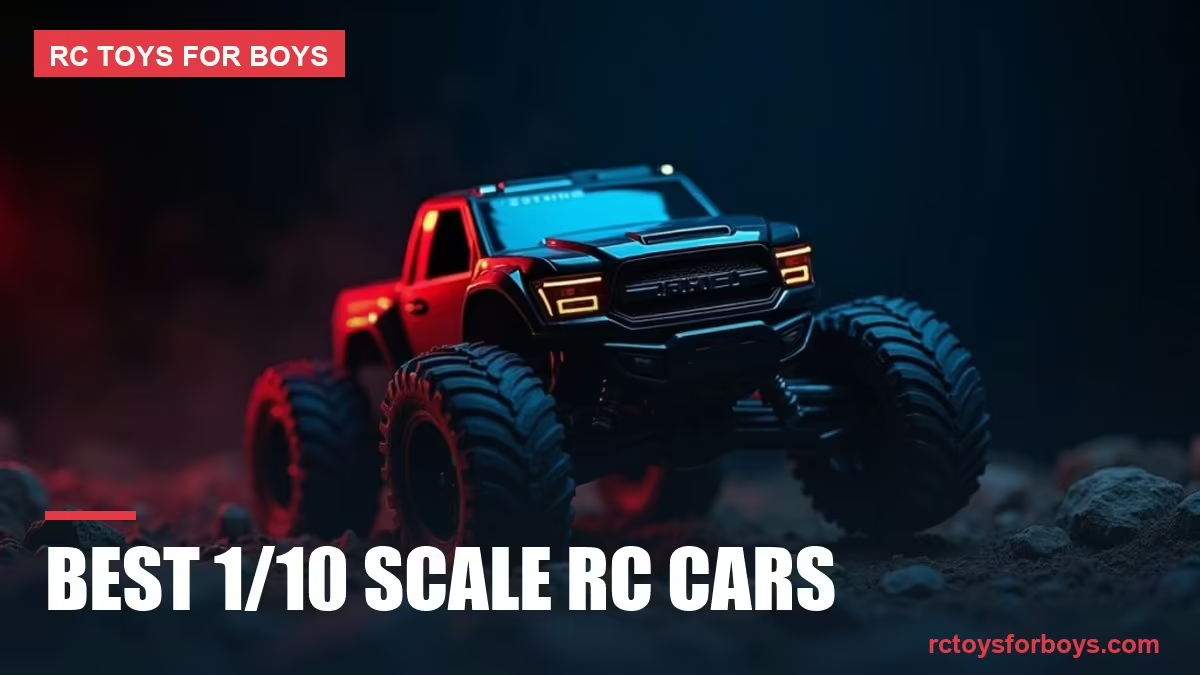
If you have spent any time in the RC hobby, you have probably heard old-timers say it over and over: when in doubt, go 1/10. There is a reason that advice gets repeated at every track and parking lot bash session. The best 1/10 scale RC car hits a sweet spot that no other size quite matches, balancing real-world speed, durable parts, a manageable footprint, and a price that does not require a second mortgage. If you are trying to figure out where to plant your flag in this hobby, 1/10 is almost always the smart first call, and often the last one you will ever need.
This guide breaks down why this scale dominates, the wild variety of vehicle types you can get in it, what to look for before you buy, and exactly who 1/10 suits best.
Why the Best 1/10 Scale RC Car Is the Most Popular Size
Scale, in RC terms, is the ratio of the model to the full-size vehicle it represents. A 1/10 car is roughly one-tenth the size of the real thing, which usually lands it somewhere around 15 to 20 inches long depending on the body style. If you want the full breakdown of how the numbers work across the range, our RC scale sizes guide walks through it from the tiny micros up to the giant 1/5 monsters.
So why does 1/10 win the popularity contest year after year? It comes down to balance. Every other scale trades something away.
- Size you can live with. A 1/10 rig is big enough to feel substantial and handle rough ground, but small enough to fit in a backpack, a car trunk, or a closet shelf.
- Speed that respects you. Plenty of 1/10 vehicles are genuinely fast, without the terrifying, parts-shredding velocity that larger or specialized speed builds reach.
- Durability that forgives mistakes. The parts are big enough to take real abuse. You will break things, everyone does, but 1/10 components hold up to crashes far better than the fragile little bits in smaller scales.
- Price that makes sense. You can get into a solid 1/10 ready-to-run for a reasonable outlay, and the running costs, batteries, tires, and spares, stay sane compared to the bigger classes.
- Parts on every shelf. This is the quiet superpower. Because 1/10 is so common, hop-ups and replacement parts are everywhere. When you snap an arm on a Sunday afternoon, the odds of finding a fix without waiting a week are far better at this scale.
That last point matters more than beginners realize. A hobby-grade car you cannot get parts for is a paperweight the moment it breaks. The deep ecosystem around 1/10 keeps your rig running for years.
The Types of 1/10 Scale RC Cars
One of the best things about this scale is how much variety lives inside it. Whatever kind of driving you are dreaming about, there is a 1/10 platform built for it. Here are the main families you will run into when you browse a category of RC cars.
Touring Cars
These are low, sleek, four-wheel-drive on-road machines built for smooth pavement. Touring cars carve corners on grippy rubber tires and reward precise driving. If you love the idea of scale road racing and have access to clean asphalt or a parking lot, this is your category.
Buggies
The classic off-road racer. A 1/10 buggy is lightweight, nimble, and right at home on dirt tracks with jumps and ruts. Available in two-wheel and four-wheel drive, buggies are a long-standing competition staple and a fantastic way to learn real racecraft.
Short-Course Trucks
Modeled after desert race trucks, short-course rigs wear chunky tires and a wide, covered body that shrugs off door-to-door contact. They are forgiving, tough, and great for backyard bashing as well as club racing. Many drivers consider this the ideal do-everything body style.
Monster Trucks
Big tires, big suspension travel, big air. A 1/10 monster truck is built to plow over curbs, launch off ramps, and survive landings that would fold a lower-slung car. If your idea of fun is pure send-it bashing, this is where you belong.
Crawlers
The slow, technical opposite of everything above. Rock crawlers prioritize torque, articulation, and grip over speed, picking their way over rocks, roots, and obstacles at a walking pace. It is a meditative, problem-solving side of the hobby that hooks a lot of patient drivers.
Drift Cars
Touring-style chassis fitted with hard, low-grip tires designed to slide. Drifting is all about controlled chaos, holding a sideways line through a corner with throttle and steering finesse. It looks spectacular and is wonderfully addictive once it clicks.
Comparison of 1/10 Vehicle Types
| Vehicle Type | Best Surface | Driving Style | Durability for Bashing | Best For |
|---|---|---|---|---|
| Touring Car | Pavement | Precise, high-grip cornering | Lower | On-road racers |
| Buggy | Dirt tracks | Fast, nimble off-road | Medium | Off-road racing |
| Short-Course Truck | Mixed / dirt | Forgiving all-rounder | High | Do-everything drivers |
| Monster Truck | Anything rough | Jumps and big air | Very high | Hardcore bashers |
| Crawler | Rocks / obstacles | Slow, technical | High | Patient problem-solvers |
| Drift Car | Smooth pavement | Controlled sliding | Lower | Style-focused drivers |
What to Look For in a 1/10 Scale RC Car
Once you have picked a vehicle type, a handful of features separate a rig you will love from one that frustrates you. Here is what a seasoned buyer checks before pulling the trigger.
Two-Wheel Drive or Four-Wheel Drive
Four-wheel drive gives you more traction, easier handling, and better jump control, which makes it the friendlier choice for newcomers. Two-wheel drive is lighter, often cheaper, and teaches throttle control because the back end will step out on you. Neither is wrong; it depends on the surface and how much challenge you want.
Brushed or Brushless Power
Brushed motors are simple, affordable, and easy to live with, which is why many entry rigs use them. Brushless systems deliver more speed, more efficiency, and longer motor life, at a higher price. If you think you will catch the speed bug, a brushless setup leaves you more room to grow.
Waterproof Electronics
Look for sealed, water-resistant electronics if you ever want to run in damp grass, puddles, or light snow. It is one of those features you do not think about until the day a wet lawn ends your session early.
Ready-to-Run or Kit
A ready-to-run car arrives mostly assembled and needs only a battery and charger to roll. A kit is an unassembled build that teaches you every part of the car and rewards you with deep tuning knowledge, but it asks for time and patience. Most people, and nearly all beginners, should start ready-to-run.
Battery and Charger Basics
Check whether a battery and charger are included, because they often are not. Factor that cost into your budget, and never charge lithium packs unattended. Good charging habits keep your gear safe and your run times long.
Who the Best 1/10 Scale RC Car Suits
The honest answer is almost everyone, which is exactly why this scale is so beloved. But a few groups benefit the most.
- First-time hobbyists who want a real, upgradeable car without the cost and bulk of larger scales.
- Returning drivers coming back after years away, who will find the parts ecosystem and community as strong as ever.
- Adults who want genuine performance and tuning depth. If that is you, our roundup of the best RC cars for adults leans heavily on this scale for good reason.
- Families who want one car that a parent and a kid can both drive and learn on together without it being too fast or too fragile.
About the only people who should look elsewhere are those chasing extreme top speed, who may want a dedicated speed platform, and those with very limited space or budget, who might start smaller. For the vast majority, though, 1/10 is the answer. If you are weighing the two giants of the bashing world as you shop, our Traxxas vs Arrma breakdown will help you choose a brand to build around.
Frequently Asked Questions
Is a 1/10 scale RC car good for beginners?
Yes. The 1/10 scale is widely considered the best starting point for newcomers. The cars are durable enough to survive learning crashes, parts are easy to find, the speeds are manageable, and the price of entry is reasonable. A four-wheel-drive, ready-to-run 1/10 vehicle is an ideal first hobby-grade car.
How fast does a 1/10 scale RC car go?
Speed varies enormously by model and setup. Brushed entry cars run on the slower, more controllable end, while brushless-equipped rigs can reach much higher speeds. Because the range is so wide, always check the specifications of the specific vehicle you are considering rather than assuming a number for the whole scale.
What is the difference between 1/10 and 1/8 scale?
A 1/8 scale car is larger, heavier, and typically more powerful than a 1/10, which makes it more capable but also more expensive to buy and run. The 1/10 scale stays more compact, more affordable, and easier to transport and store, which is a big part of why it is the more popular everyday choice.
Can a 1/10 scale RC car handle off-road driving?
Absolutely, as long as you pick the right type. Buggies, short-course trucks, monster trucks, and crawlers are all built specifically for dirt, rocks, and rough terrain. Touring and drift cars, by contrast, are designed for smooth pavement and will struggle off-road.
Are parts easy to find for 1/10 scale RC cars?
This is one of the scale’s biggest advantages. Because 1/10 is so common, replacement parts, upgrades, and hop-ups are widely stocked by retailers and brands. When you break something, you can usually get back up and running quickly instead of waiting on a hard-to-find component.
Similar Car Picks
🏁 Don't Overpay for Your Kid's Next RC Toy
Get our free Dad's RC Buying Guide + weekly deal alerts on the best RC cars, trucks & drones. No spam, just the good stuff.