Best 4×4 RC Trucks: Top All-Terrain Picks for 2026

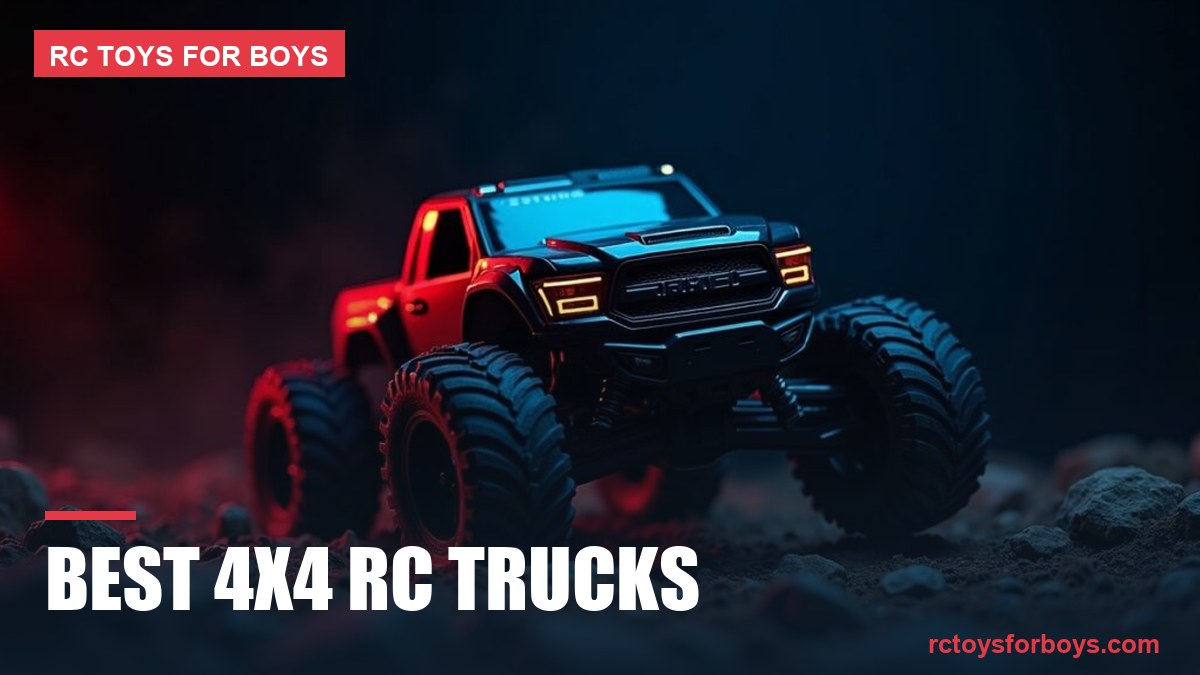
If you’ve spent any time around radio control off-roaders, you already know the question that comes up most often: what’s the best 4×4 RC truck for tearing across dirt, gravel, grass, and rock without getting stuck every five feet? The short answer is that four-wheel drive changes everything. A 4WD rig puts power to all four corners, and that traction is the difference between a truck that claws its way over an obstacle and one that spins helplessly in place. In this guide I’ll walk you through why 4×4 matters, the main truck types, what to look for before you buy, and which style suits which terrain.
Why 4×4 (4WD) Matters for the Best 4×4 RC Truck
Two-wheel drive rigs are fun and often cheaper, but they put all their power down through a single axle. On smooth pavement that’s fine. The moment you hit loose dirt, wet grass, or an incline, a 2WD truck starts to break traction and the rear end steps out. A 4WD setup splits torque between the front and rear axles, so even when two tires lose grip, the other two keep pulling.
That balance gives you three real advantages off-road:
- Traction: Power to all four wheels means fewer stalls on hills, sand, and slick surfaces.
- Control: Drive is more predictable through corners and over uneven ground, so the truck goes where you point it.
- Climbing ability: Steep, technical terrain that stops a 2WD truck cold is exactly where 4×4 shines.
The trade-off is a bit more weight, a slightly more complex drivetrain, and usually a higher price. For serious off-road use, though, that’s a trade worth making every time.
The Main Types of 4×4 RC Trucks
“4×4 truck” isn’t one thing. There are several distinct categories, and each is built for a different job. Picking the right type matters more than chasing the flashiest paint job.
Monster Trucks
Tall, big-tired, and built to bash. Monster trucks are the rigs most people picture first: huge ground clearance, long-travel suspension, and enough power to launch off ramps and stomp over curbs. They’re forgiving for beginners because the sheer size shrugs off mistakes, and they’re a blast in open dirt lots and backyards.
Short-Course Trucks
Modeled after desert and stadium race trucks, short-course rigs wear protective body panels that cover the tires and run a lower, planted stance. They’re quick, handle jumps well, and hold up to door-to-door racing. If you like speed runs and bashing with a racing flavor, this is a great all-rounder.
Rock Crawlers
Crawlers are the slow, deliberate specialists. Low gearing, soft tires, articulating suspension, and high torque let them creep up boulders and over logs at a walking pace. Speed isn’t the point here; control and grip are. If your idea of fun is picking a line through a rock garden, this is your category.
Trail Trucks
Trail trucks are scale-focused cousins of the crawler, often built to look like real 4×4 SUVs and pickups. They balance crawling ability with the looks and proportions of a full-size vehicle, and they shine on mixed trails where you want both capability and realism. Many enthusiasts treat them as the “weekend cruiser” of the hobby. You can browse dedicated RC crawlers if this is the direction you’re leaning.
What to Look For in the Best 4×4 RC Truck
Once you’ve narrowed down a type, the details separate a truck you’ll love from one that frustrates you. Here’s what I check before recommending any rig.
Waterproofing
Off-road means puddles, snow, and damp grass. Look for waterproof-rated electronics, the receiver box, servo, and speed control especially. Note that most brushed and brushless motors tolerate moisture, but it’s worth confirming the electronics are sealed if you plan to run in wet conditions.
Durability
Crashes happen. A good off-road truck uses tough composite or metal parts in the high-stress areas, and just as important, it should have replacement parts that are easy to find. A rig you can fix on a Saturday afternoon beats an exotic one you can’t get spares for.
Suspension
Oil-filled shocks and adjustable suspension geometry soak up landings and keep tires planted. More suspension travel generally helps over rough ground, while crawlers prioritize articulation so wheels stay on the rock instead of lifting.
Scale
Scale describes the truck’s size relative to a real vehicle. Larger scales tend to roll over obstacles more easily and run more stably, while smaller scales are lighter, cheaper, and easier to store and transport. Pick the scale that fits your space and the terrain you’ll actually run.
Brushed vs Brushless
This is the motor question. Brushed systems are simple, affordable, and beginner-friendly, with smooth low-speed control that crawlers love. Brushless systems are more efficient, run cooler, need less maintenance, and deliver more top-end power, which is why bashers and racers gravitate toward them. Neither is “better”; they’re suited to different jobs.
Best 4×4 RC Truck by Terrain and Driver
Terrain should drive your choice as much as personal taste. Here’s a quick comparison of how the main 4×4 truck types line up against common conditions and driver styles.
| Truck Type | Best Terrain | Best For | Speed vs Control |
|---|---|---|---|
| Monster Truck | Open dirt, backyards, ramps, packed gravel | Beginners and bashers who want big air | Leans toward speed and fun |
| Short-Course Truck | Dirt tracks, parks, hardpack, light trails | Speed runs and casual racers | Balanced |
| Rock Crawler | Boulders, rock gardens, logs, steep ledges | Patient drivers who love technical lines | All control |
| Trail Truck | Mixed trails, woods, scale courses | Scale fans and weekend cruisers | Control with realism |
If you mostly run on lawns, traction and tire choice matter even more, and our guide to the best RC cars for grass digs into that surface specifically. Still deciding between major brands? Our Traxxas vs Arrma breakdown compares two of the biggest names in ready-to-run off-road rigs. And when you’re ready to shop, you can explore the full lineup of RC trucks to match a model to the terrain you ride most.
Putting It All Together
The best 4×4 RC truck is the one that matches how and where you drive. Want to launch off ramps and bash in the backyard? A monster truck or short-course rig is your friend. Crave slow, technical conquests over rock and root? A crawler or trail truck will reward your patience. Lock in your terrain first, then weigh waterproofing, durability, suspension, scale, and your brushed-versus-brushless preference. Get those right and four-wheel drive will keep you moving long after a 2WD truck would be buried to its axles.
Frequently Asked Questions
Is a 4×4 RC truck better than a 2WD for off-road?
For most off-road use, yes. Four-wheel drive sends power to all four tires, which improves traction, control, and climbing ability on dirt, grass, sand, and inclines. A 2WD truck can still be fun and is often lighter and cheaper, but it breaks traction more easily on loose or steep terrain.
What’s the difference between a rock crawler and a trail truck?
A rock crawler is built purely for slow, technical climbing with low gearing and maximum articulation. A trail truck shares much of that capability but adds scale realism, often styled to look like a real 4×4 SUV or pickup, making it better suited to mixed trails where looks and versatility matter.
Do I need a brushless motor for off-road?
Not necessarily. Brushed motors are affordable, simple, and great for beginners and crawling, where smooth low-speed control matters most. Brushless motors run cooler, need less maintenance, and offer more top-end power, which bashers and racers tend to prefer. Choose based on your driving style, not hype.
Are 4×4 RC trucks waterproof?
Many are, but not all. Look for trucks with waterproof-rated electronics if you plan to run in puddles, snow, or wet grass. Even on water-resistant rigs, it’s smart to clean and dry the drivetrain afterward to prevent wear and corrosion over time.
What scale 4×4 RC truck should a beginner buy?
A mid-to-larger scale is usually the most forgiving starting point because bigger trucks roll over obstacles more easily and run more stably. That said, smaller scales are lighter, more affordable, and easier to store, so factor in your budget and the space you have to run before deciding.
Similar Off-road Picks
🏁 Don't Overpay for Your Kid's Next RC Toy
Get our free Dad's RC Buying Guide + weekly deal alerts on the best RC cars, trucks & drones. No spam, just the good stuff.