Unleash RC Car Power: LiPo vs NiMH – Your Essential Battery Guide for Epic Fun

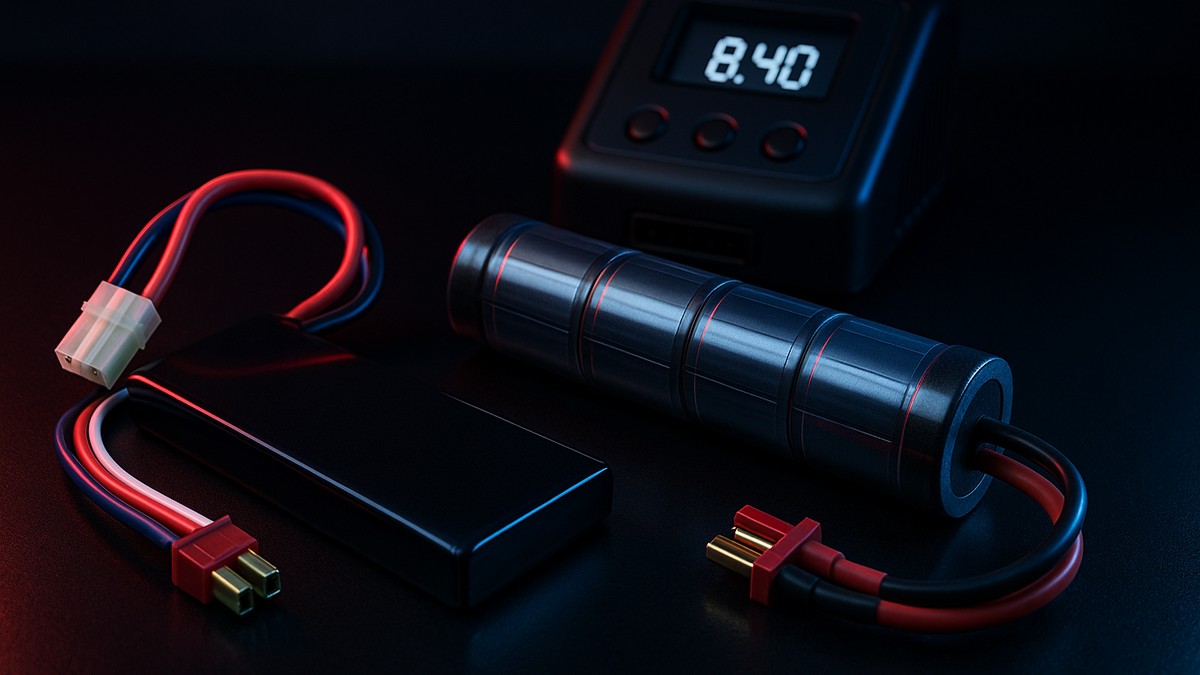
Hey there, fellow RC enthusiast! Ready to supercharge your remote-control car adventures? Whether you’re a seasoned basher, a competitive racer, or a dad looking to get his son (or daughter!) into the exhilarating world of RC, one thing’s for sure: the battery is the heart of your vehicle. It’s what delivers the punch, the speed, and the run time that makes every session epic. But with all the acronyms and numbers floating around – LiPo, NiMH, mAh, C-rating, 2S, 3S – it can feel like trying to solve a puzzle. Don’t sweat it! I’m here to be your guide through the battery jungle, helping you pick the perfect power source for maximum fun. Let’s dive in!
The Powerhouses: LiPo vs. NiMH – A Head-to-Head Battle
When it comes to RC car batteries, you’re primarily going to encounter two main types: Nickel-Metal Hydride (NiMH) and Lithium Polymer (LiPo). Both have their place in the hobby, offering different advantages depending on your needs, budget, and experience level. Let’s break ’em down.
NiMH Batteries: The Reliable Workhorse
NiMH batteries have been the backbone of the RC world for a long time, and for good reason. They’re robust, relatively forgiving, and generally easier to handle, making them a fantastic choice for beginners and casual drivers. Many entry-level RC cars, like those from Traxxas or Redcat Racing, often come bundled with a NiMH battery and a basic charger to get you started right out of the box.
Pros of NiMH:
- Durability: They’re tough! NiMH batteries can withstand more physical abuse and temperature fluctuations than LiPos.
- Ease of Use: Less complicated charging and storage requirements. You don’t need a fancy balance charger for NiMH, and you don’t have to worry about “storage charge” as much.
- Safety: Significantly lower risk of fire or catastrophic failure compared to LiPo, even if mishandled. This makes them a great choice for younger drivers.
- Lower Initial Cost: Generally more affordable to buy initially, both the batteries themselves and their compatible chargers.
- Forgiving: They’re more tolerant to being fully discharged without permanent damage (though it’s still best to avoid it).
Cons of NiMH:
- Lower Power Output: They don’t deliver the same raw “punch” or consistent power as LiPo batteries. You’ll notice a gradual power fade as the battery discharges.
- Heavier: For the same energy capacity (mAh), NiMH batteries are significantly heavier than LiPo, which can impact your vehicle’s handling and speed.
- Longer Charge Times: Typically take longer to charge than LiPo batteries with comparable capacity.
- Memory Effect: While less pronounced than older NiCad batteries, NiMH can still suffer from a mild “memory effect” if repeatedly recharged from a partial discharge, potentially reducing capacity over time.
Best For: Beginners, casual bashers, drivers on a budget, and those who prioritize safety and simplicity. Excellent for vehicles like the LaTrax Teton or Traxxas’s 1/16 scale models where extreme power isn’t the primary goal, or for many 1/10 scale monster trucks like the Traxxas Stampede.
LiPo Batteries: The Performance King
If you’re chasing blistering speed, insane acceleration, and consistent power throughout your run, then LiPo batteries are your go-to. They’ve revolutionized the RC hobby, pushing performance boundaries to levels unimaginable just a couple of decades ago. Most high-performance and competition-grade RC vehicles, such as those from Arrma or high-end Axial rigs, are designed to run on LiPo power.
Pros of LiPo:
- High Power Output: They deliver incredible current, giving your RC car that explosive acceleration and top-end speed.
- Consistent Power: Unlike NiMH, LiPo batteries maintain a more consistent voltage throughout their discharge cycle, meaning your car feels powerful from start to finish.
- Lighter Weight: Significantly lighter than NiMH batteries of the same capacity, which improves handling, acceleration, and overall performance.
- Faster Charging: With the right charger, LiPo batteries can often be charged much quicker than NiMH, getting you back to the action sooner.
- Higher Capacity Options: You can find LiPo batteries with very high mAh ratings for extended run times without adding excessive weight.
Cons of LiPo:
- Safety Concerns: This is the big one. LiPo batteries can be volatile. If punctured, overcharged, over-discharged, or otherwise mistreated, they can swell, catch fire, or even explode.
- Specific Charging Requirements: Require a specialized LiPo balance charger to ensure each cell within the battery pack charges evenly, which is crucial for safety and longevity.
- Specific Storage Requirements: Should be stored at a “storage charge” voltage (typically 3.8V per cell) for long-term health.
- Fragile: More susceptible to damage from impacts compared to NiMH.
- Higher Initial Cost: Both the batteries and the necessary safety equipment (LiPo charging bags) and smart chargers are generally more expensive.
Best For: Experienced hobbyists, competitive racers, serious bashers, or anyone seeking maximum performance from their 1/10 scale and larger vehicles, like the Arrma Senton or Traxxas Slash (when equipped for LiPo).
Safety First! Essential Battery Handling
No matter which battery type you choose, safety should always be your top priority. But with LiPo, it’s absolutely paramount.
LiPo Safety is Paramount:
- Always Use a LiPo-Specific Charger: Never use a NiMH-only charger for a LiPo battery. Invest in a quality smart charger with balance charging capabilities.
- Charge in a LiPo Safety Bag: These fire-retardant bags offer an extra layer of protection in case of a battery incident. They are a mandatory accessory!
- Never Overcharge or Over-Discharge: Your smart charger will handle overcharging, but for over-discharging, many ESCs (Electronic Speed Controllers) have a “LiPo cut-off” setting. Make sure this is enabled! Running a LiPo pack below 3.0V per cell can permanently damage it and create a safety hazard.
- Inspect Before Every Use: Look for any signs of swelling, punctures, cuts, or damaged wires. If a LiPo battery is puffy or damaged, discontinue use immediately and dispose of it safely.
- Proper Storage: Store LiPo batteries at a “storage charge” (typically 3.8V per cell) in a cool, dry place away from flammable materials.
- Safe Disposal: Never throw a LiPo battery in the trash. Discharge it fully (e.g., using a specialized discharger or by connecting it to a small light bulb until it’s completely dead) and take it to a local battery recycling center.
NiMH Safety (Still Important!):
- Avoid Short Circuits: Ensure battery connectors are always protected and never let the positive and negative terminals touch.
- Don’t Overcharge: While less volatile, overcharging NiMH batteries can shorten their lifespan and cause them to overheat. Use a charger with peak detection.
- Keep Cool: Don’t leave batteries in direct sunlight or a hot car, as extreme heat can damage them.
Decoding the Specs: What Do All Those Numbers Mean?
Understanding the numbers on your battery is key to choosing the right one for your RC car. Here’s a quick breakdown:
- Voltage (V): This determines the speed. For LiPo, you’ll see “S” ratings (e.g., 2S, 3S, 4S). Each “S” refers to a cell, and each cell is typically 3.7V nominal (4.2V fully charged). So, a 2S LiPo is 7.4V, a 3S is 11.1V, and so on. Higher voltage equals more speed! Always check your RC vehicle’s ESC and motor limits to ensure compatibility before using a higher voltage battery.
- Capacity (mAh – milliampere-hour): This indicates run time. Higher mAh means longer run times between charges. A 5000mAh battery will generally run twice as long as a 2500mAh battery (all else being equal).
- Discharge Rate (C-rating): This is primarily for LiPo batteries and represents how much current the battery can safely deliver. A higher C-rating means more “punch” and power, especially during acceleration. It’s calculated by multiplying the C-rating by the mAh capacity (e.g., a 5000mAh (5 Ampere) 50C LiPo can deliver 250 Amps (5 x 50 = 250)). Ensure your C-rating is sufficient for your vehicle’s demands to avoid stressing the battery.
- Connector Types: The plug that connects your battery to your RC car. Common types include Traxxas iD (a proprietary, intelligent connector on Traxxas vehicles), XT60, EC3/EC5 (often found on Spektrum and Arrma models), and Deans (T-connector). Make sure your battery’s connector matches your car’s ESC, or get an adapter.
Choosing Your Battery: Tailoring Power to Your RC
So, which battery is right for you? It boils down to your vehicle, your driving style, and your willingness to manage LiPo’s specific requirements.
What to Look For When Buying a Battery:
- Vehicle Compatibility: Check your RC car’s manual or product page. It will specify the recommended battery type (NiMH, 2S LiPo, 3S LiPo, etc.) and voltage limits for your ESC. For example, a Traxxas Slash might come with a NiMH, but be fully LiPo-compatible up to 3S.
- Physical Size: Batteries come in various shapes and sizes. Ensure the battery you choose will physically fit in your RC car’s battery tray. This is especially important for smaller 1/16 or 1/18 scale vehicles like the LaTrax line.
- Connector Type: As mentioned, ensure it matches your ESC or grab an adapter. Many brands like Traxxas have their own connectors, while others like Arrma often use EC5.
- mAh (Capacity): Balance run time with weight. More mAh means longer fun, but also potentially more weight. For 1/10 scale, 5000mAh is a popular sweet spot.
- C-rating (for LiPo): Aim for at least 30C for casual use, 50C or higher for performance vehicles and demanding driving.
- Brand Reputation: Stick with reputable battery brands. Quality control and cell matching are crucial for performance and safety.
- Balance Port (for LiPo): Essential for charging. Make sure your LiPo battery has one that matches your charger.
For Beginners & Casual Fun: If you’re just starting out, or buying for a younger child (ages 6-10), a good quality NiMH battery is often the best choice. It simplifies the experience and prioritizes safety, allowing them to focus on driving. Many 1/10 scale monster trucks and 1/16 scale vehicles are perfectly happy on NiMH.
For Thrill-Seekers & Advanced Drivers: Once you’re comfortable with RC basics and want more speed and power, upgrading to LiPo is the natural progression. If your RC car is 1/10 scale or larger (like a Traxxas Maxx or an Arrma Big Rock), you’ll truly unlock its potential with LiPo. Even teens (12-14+) can handle LiPo with proper education and supervision.
Beyond the Battery: Chargers & Accessories
Your battery is only as good as the charger you use with it. A smart charger is a vital piece of equipment.
- Smart Chargers: These are essential for LiPo batteries as they can balance charge each cell, preventing overcharging and ensuring battery health. Many also handle NiMH and other battery types. Look for chargers from brands like Traxxas (with iD technology), Spektrum (Smart chargers), or other reputable RC electronics manufacturers.
- LiPo Safety Bags: As discussed, a non-negotiable item for LiPo charging and storage.
- Voltage Alarms/Cut-offs: If your ESC doesn’t have a reliable LiPo cut-off, a separate voltage alarm that plugs into your LiPo’s balance port can alert you when the voltage drops too low, preventing over-discharge.
- Adapter Cables: If your chosen battery has a different connector than your ESC or charger, you’ll need an adapter cable.
Top Picks: My Go-To Recommendations (General Categories)
- Solid All-Around NiMH Pack: For 1/10 scale bashers like the Traxxas Stampede or Slash, a reputable 7-cell 8.4V NiMH battery with 3000-5000mAh capacity is a fantastic starting point. It offers good run time and reliable power without the LiPo complexities. Look for brands like Venom, Duratrax, or even Traxxas’s own NiMH packs.
- Beginner-Friendly LiPo System: The Traxxas iD Power Cell LiPo batteries paired with a Traxxas iD charger are incredibly user-friendly. The iD system automatically detects the battery type and optimizes charging, making LiPo safer and simpler for those new to it. A 2S (7.4V) 5000mAh iD LiPo is perfect for most 1/10 scale Traxxas vehicles.
- High-Performance & Feature-Rich LiPo: For serious bashers or racers driving Arrma, Axial, or other high-performance platforms, look at 3S or even 4S LiPo packs from brands like Spektrum Smart LiPo, Gens Ace, or SMC. Spektrum Smart batteries offer advanced telemetry and charging features when paired with a Spektrum Smart charger, providing real-time data and simplified charging.
- Compact LiPo for Smaller Scales: For 1/16 or 1/18 scale vehicles like the LaTrax line, a small 2S LiPo pack (around 1500-2200mAh) can be a game-changer for speed and agility, provided the vehicle’s electronics can handle it. Ensure it physically fits the battery tray.
FAQs: Common Battery Questions Answered
Here are a few questions I often get asked:
Q: Can I use a LiPo charger for NiMH batteries?
A: Yes, most modern “smart” chargers are multi-chemistry and can charge both LiPo and NiMH batteries. However, you must select the correct battery type and settings on the charger before starting. Never use a basic NiMH-only wall charger for a LiPo battery.
Q: How long do RC batteries typically last?
A: It varies greatly. A well-maintained LiPo battery can last 100-300 charge cycles, or several years, depending on use. NiMH batteries are generally more robust and can last even longer if properly cared for, though their performance will degrade over time. Mishandling either type will drastically shorten its lifespan.
Q: What is “storage charge” for LiPo, and why is it important?
A: A storage charge is a specific voltage (typically 3.8V per cell) that LiPo batteries should be charged or discharged to if they won’t be used for more than a few days. Storing a LiPo fully charged or fully discharged can significantly degrade its performance and reduce its lifespan. Your smart charger usually has a “storage” mode for this purpose.
Q: My RC car came with a NiMH battery. Can I upgrade to LiPo?
A: In most cases, yes! Many entry-level RC cars (especially 1/10 scale from brands like Traxxas) are “LiPo ready.” You’ll need to confirm that your Electronic Speed Controller (ESC) can handle the higher voltage of a LiPo (e.g., 2S or 3S). You’ll also need a LiPo battery, a smart charger, and a LiPo safety bag. Remember to enable the LiPo cut-off feature on your ESC when using LiPo batteries!
Unleash the Fun!
Choosing the right battery is more than just picking a power source; it’s about tailoring your RC experience to exactly what you want it to be. Whether it’s the forgiving reliability of NiMH for casual backyard bashing or the blistering, consistent power of LiPo for tearing up the track, understanding your options will elevate your fun to new heights. So, arm yourself with knowledge, make an informed choice, and get ready to unleash the full power of your RC car. The asphalt (or dirt, or grass!) is calling!